
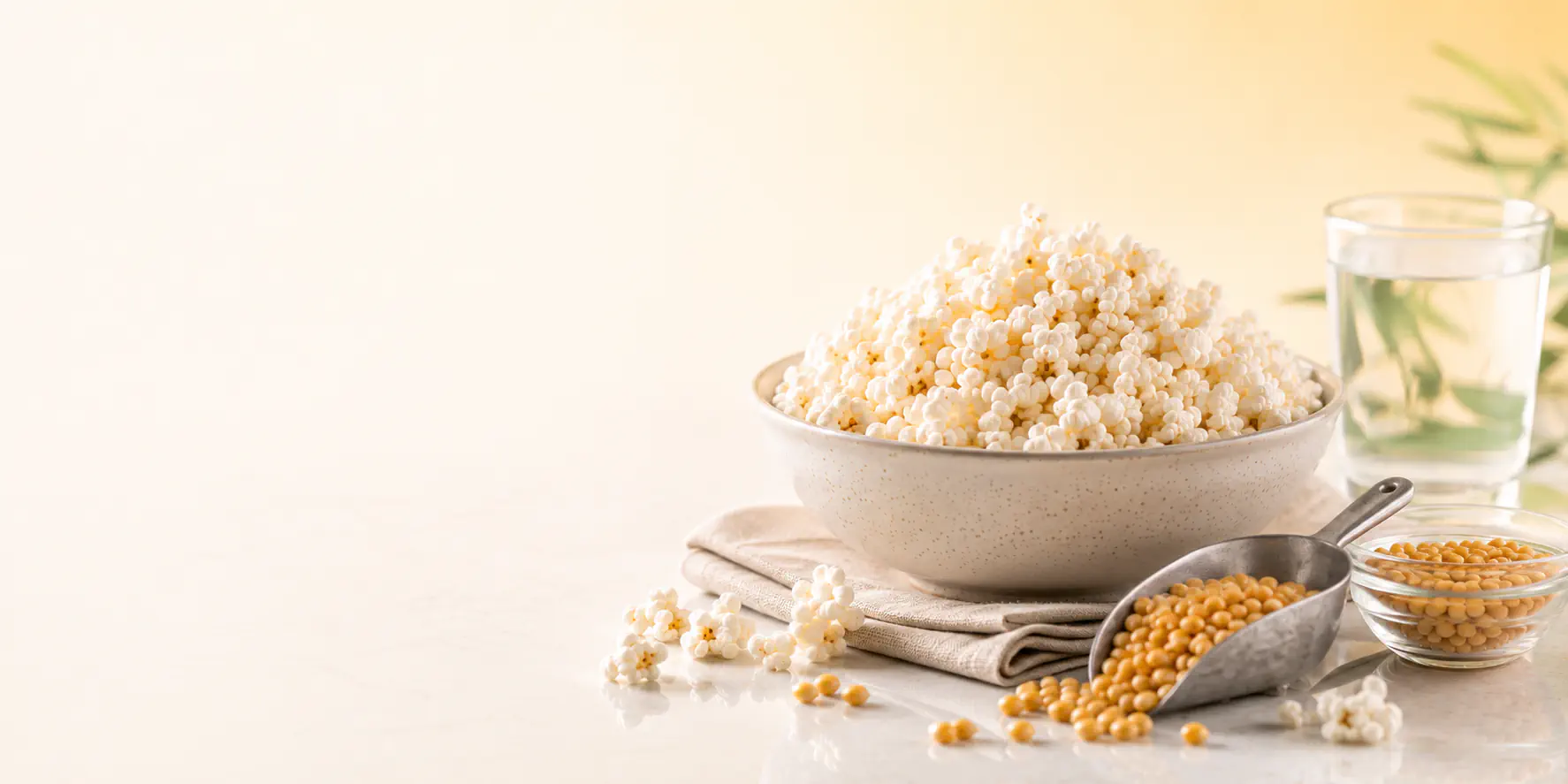
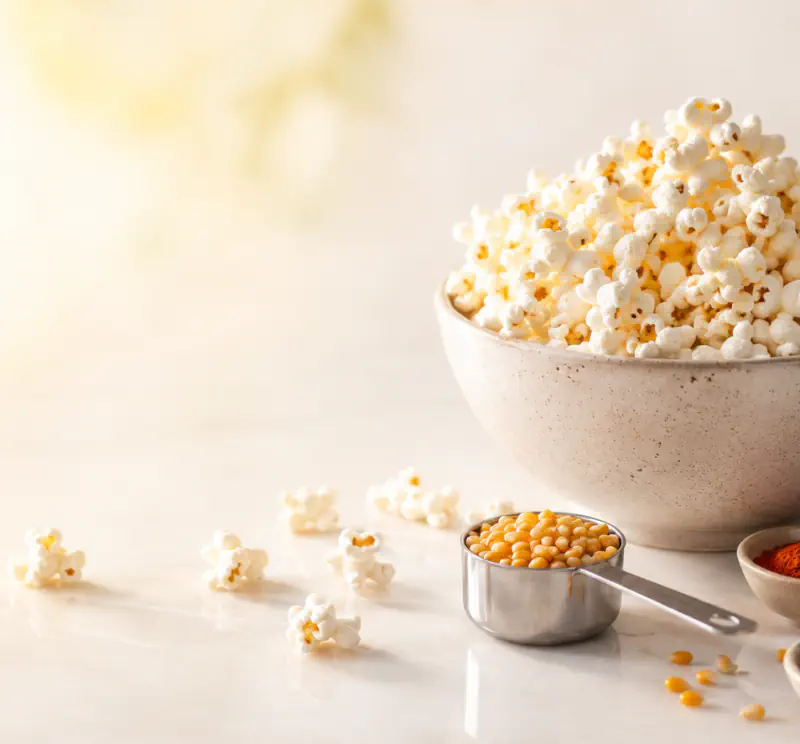
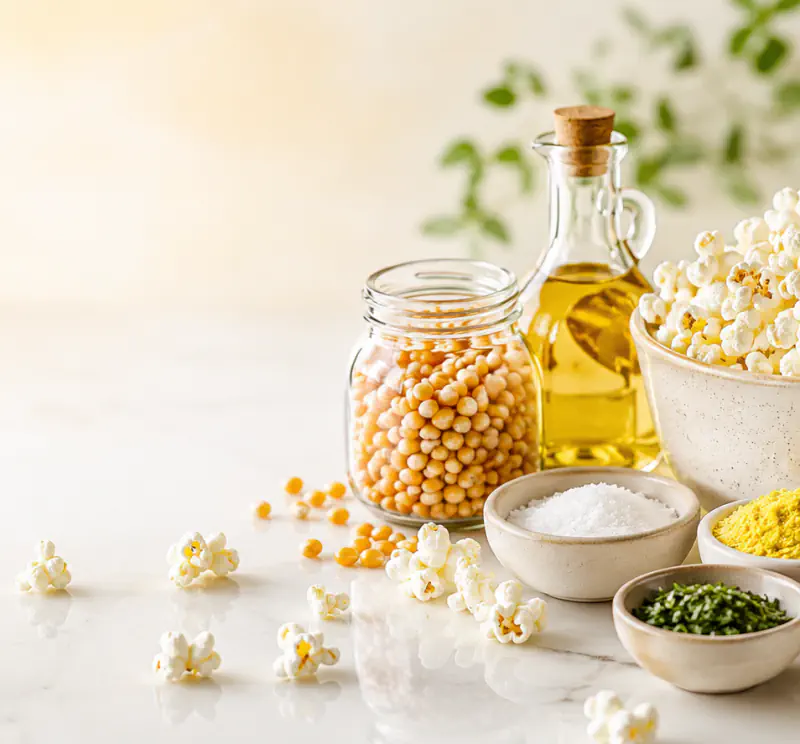


In short: Air-popped, unsweetened popcorn is one of the most nutritionally efficient snacks out there: real whole grain, plenty of fiber, low energy density. What turns it into a calorie bomb is never the corn - it's the oil, butter, and sugar.
Why popcorn genuinely counts as whole grain
Popcorn is one of the few foods where the whole-grain claim isn't up for debate: it's made of the entire corn kernel - hull (bran), germ, and endosperm. Nothing gets separated out, nothing gets milled away. That's exactly what sets it apart from most grain-based snacks, where outer layers get lost in processing.
That leads to the second point: its high fiber content. Fiber fills you up because it adds volume in your stomach and slows digestion. Combined with low energy density, that adds up to a snack you can eat a surprising amount of without taking in many calories.
The honest part: how you make it decides almost everything
The nutrition numbers that give popcorn its good reputation apply to air-popped, unsweetened popcorn. Movie-theater popcorn loaded with butter, and caramel corn with a thick sugar coating, are nutritionally something else entirely - they can easily double the calorie count.
That's not a call to avoid them, just to be honest about it: caramel popcorn is candy, and it's allowed to be. Just don't file it under "healthy snack." If you want to make popcorn a regular everyday snack, the hot-air method with seasonings instead of sugar is your best bet.
Who this section is for
The pages in this section answer the questions that keep coming up around popcorn: how many calories does it really have? Does it work for weight loss? Is it vegan and gluten-free? At what age can kids eat it? And what about braces or a sensitive stomach?
One thing up front: we're sharing general nutrition information here, not medical advice. For health concerns, a suspected allergy, or uncertainty around kids, your doctor's or orthodontist's judgment is always the right call.
Popcorn vs. the rest of the snack drawer
Move the slider to your serving size - the bars show energy density per 100 g, the numbers on the right show your actual serving.
- Popcorn, air-popped & unsweetened 113 kcal
- Pretzels 105 kcal
- Popcorn, caramel 150 kcal
- Potato chips 161 kcal
- Milk chocolate 161 kcal
Ballpark figures per 100 g, rounded - actual numbers vary by brand and preparation. What really matters is the serving size, though: 30 g of popcorn fills a big bowl, 30 g of chocolate is three bars' worth.
What popcorn does in your body
Why this particular snack is so filling - in four steps.
- Whole kernel, nothing removed Hull, germ, and endosperm all stay intact. That's what makes popcorn count as a whole-grain food nutritionally.
- Huge volume The kernel expands to about 40 times its size when it pops. A filling bowl often weighs just 20-30 grams.
- Fiber fills your stomach It binds water, swells up, and slows digestion - one reason that full feeling sticks around longer.
- Low energy density Lots of volume, few calories: that combination is exactly what makes unsweetened popcorn one of the most efficient snacks per bowl.
The 100-gram trap
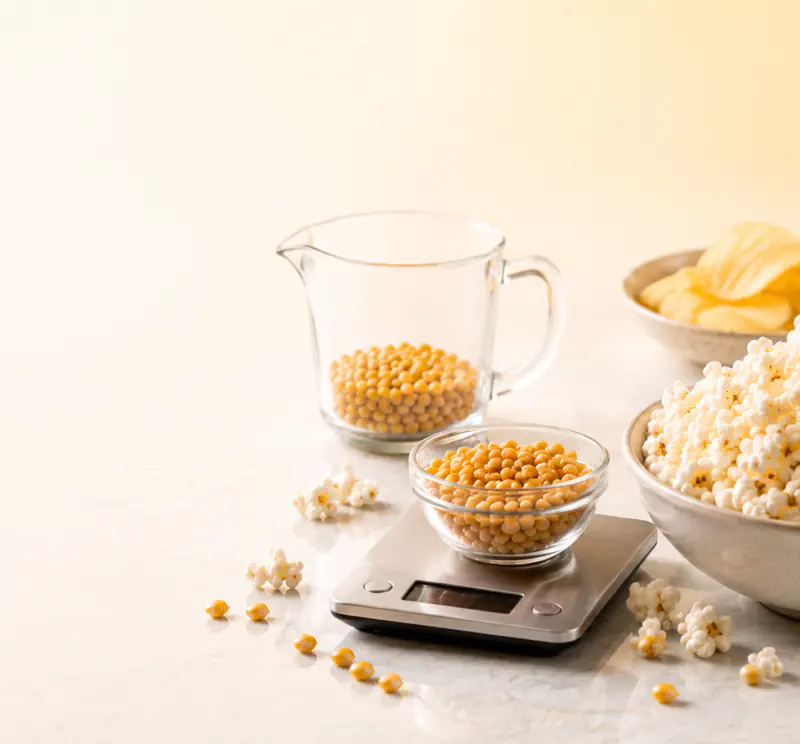
Nutrition facts are almost always listed per 100 g - and that's exactly what makes popcorn misleading. 100 g of chips fits comfortably in one hand, while 100 g of popped popcorn fills several liters, or one very large bowl. Comparing popcorn and chips by the 100 g figure means comparing completely different amounts of food. The serving size is the more realistic comparison: a typical popcorn serving is 20-30 g, a typical chip serving is 50 g or more.