
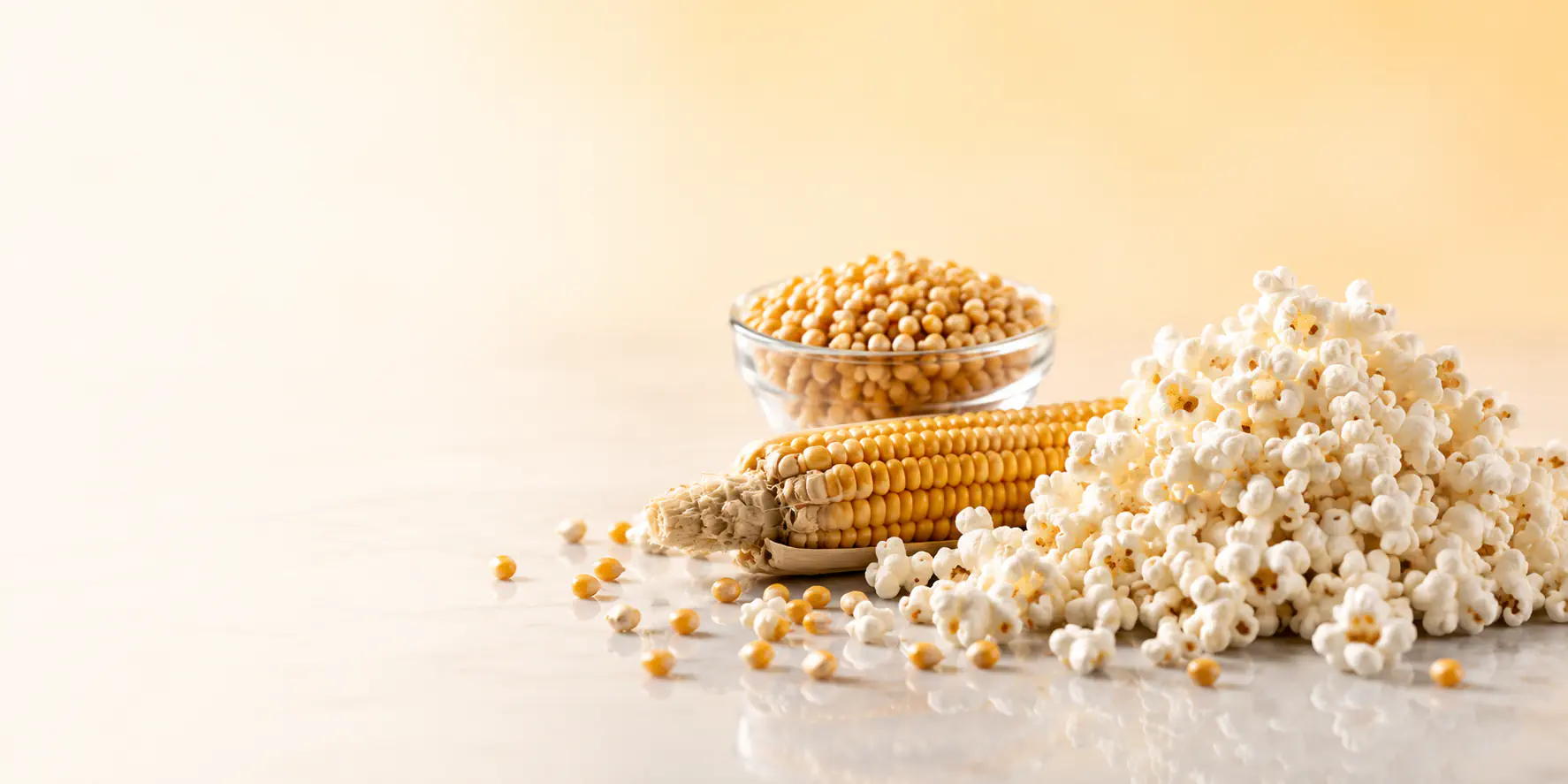
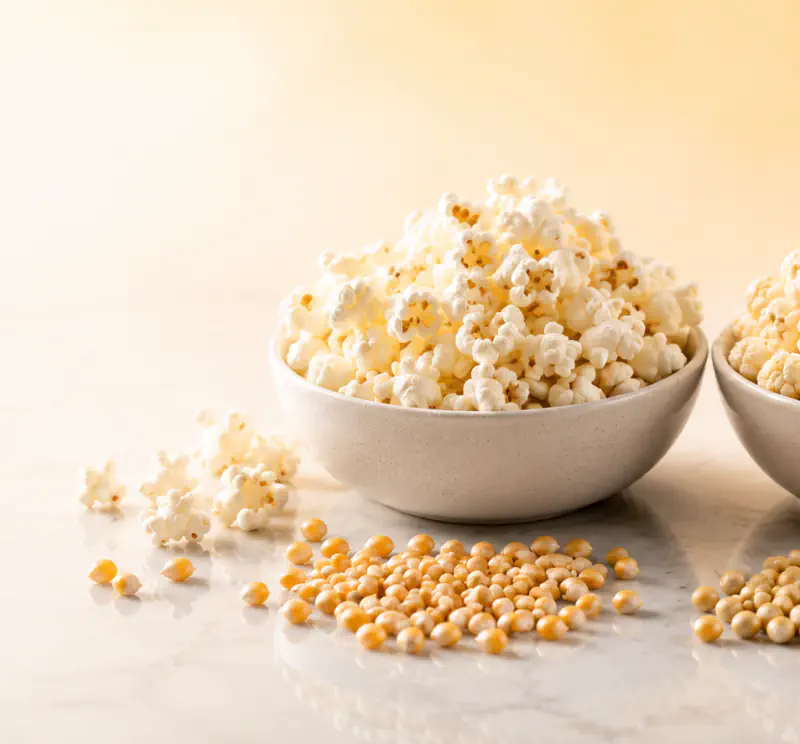
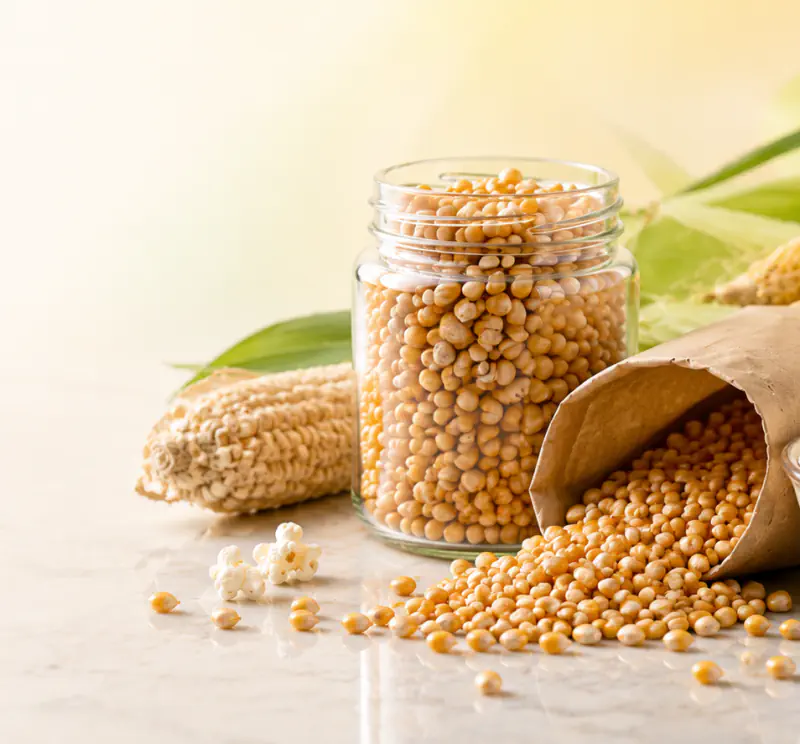
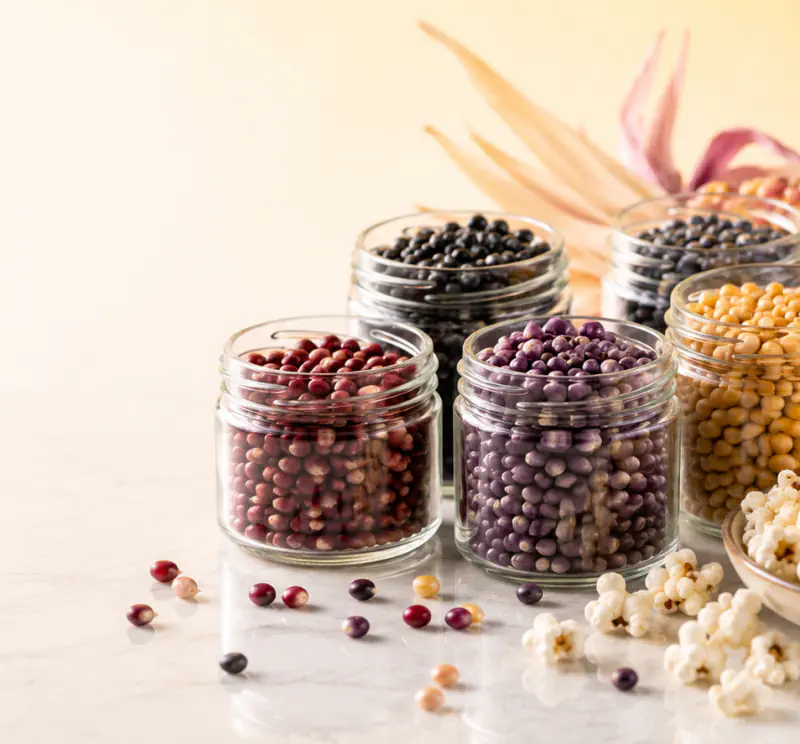
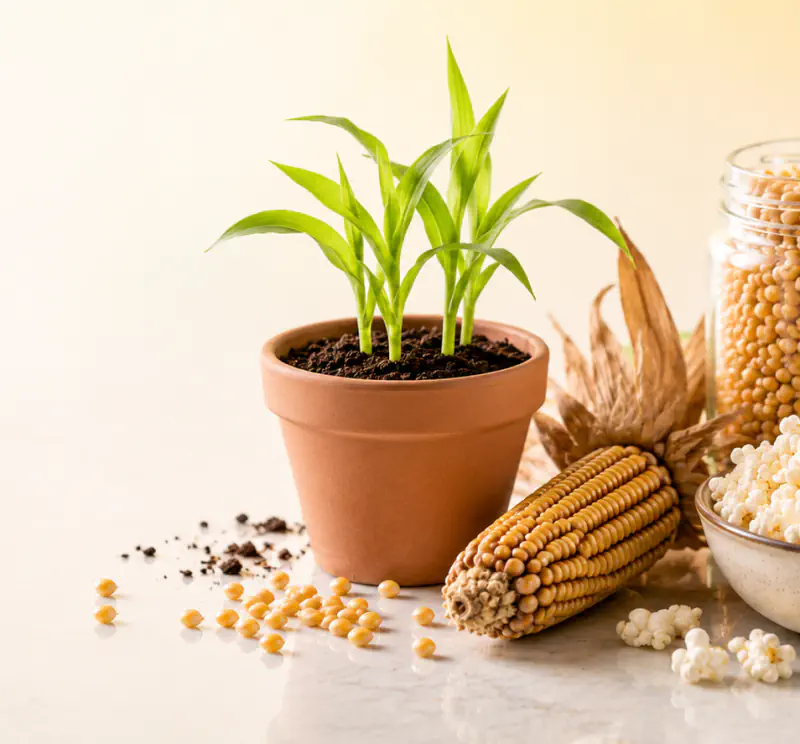
In short: Popcorn only comes from popping corn (Zea mays everta): its especially hard, dense hull holds in steam pressure long enough for the kernel to explode. Sweet corn, feed corn, or canned corn can't do that - the steam escapes before enough pressure builds up.
What actually happens inside the kernel?
A popcorn kernel is a tiny pressure cooker. Tap the points to see what job each part does while popping.
- Pericarp - the armored shell The hard, nearly waterproof outer hull is the real reason only popping corn pops. It withstands rising internal pressure instead of slowly leaking steam - until it bursts open instantly.
- Hard endosperm - the engine The dense outer starch layer conducts heat evenly inward and stabilizes the kernel as pressure builds. The more even this layer is, the more reliably the kernel pops.
- Soft endosperm - the foam This is where the starch sits that foams up into the fluffy white mass we eat once the kernel bursts. It sets in a split second in the air - that's why popcorn is crispy, not chewy.
- Water - the explosive About 14% of a kernel's weight is water. When heated, it becomes superheated steam at around 130 psi. Kernels that are too dry don't have enough of it - they just get hot and stay hard.
- Germ - the stowaway In a planted kernel, the embryo is where the plant would grow from. It plays almost no role in popping - but it's the reason popped popcorn often keeps a small darker spot.
Why regular corn just burns in a pot
Sweet corn from the grocery store, field corn, and canned corn all share the same problem: their hull is too soft and too permeable. Instead of building pressure, steam escapes gradually - the kernel dries out, browns, and eventually turns bitter, but it never pops.
Popping corn, on the other hand, is its own botanical variety (Zea mays everta) with noticeably small, pointed kernels and a high share of hard endosperm. It was bred over centuries for exactly this one trait: bursting instead of just drying out.
The factor almost everyone underestimates: moisture
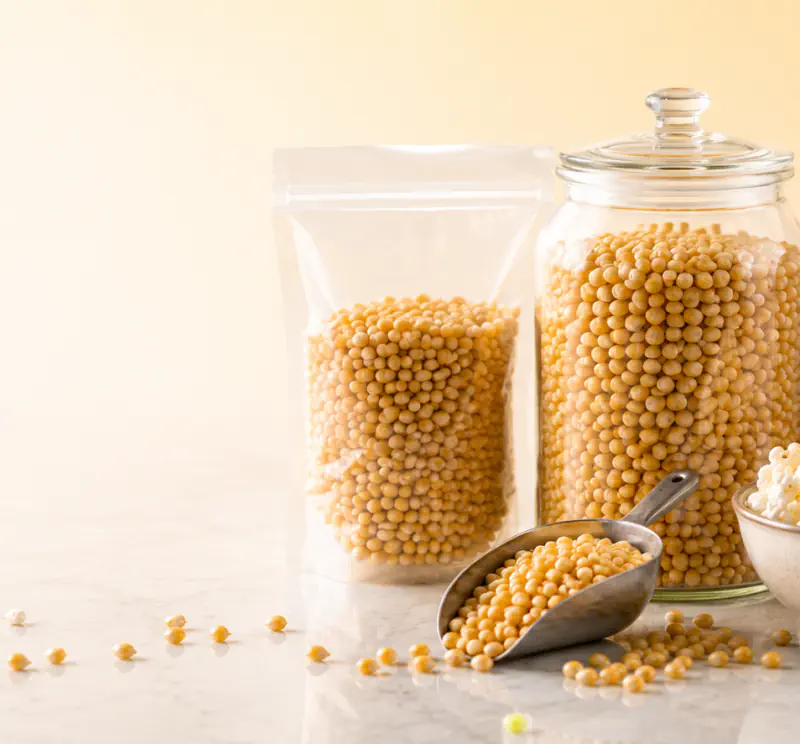
Moisture content shapes your result more than brand or price ever will. At around 14%, corn pops most reliably and biggest. Below that - say, because the bag sat open in the pantry for months - there simply isn't enough water left to turn into steam, and you end up with a pile of hard, unpopped kernels at the bottom of the bowl.
That's why storage isn't a side note, it's the biggest lever you have: airtight, dark, at room temperature. Not in the fridge - the dry air in there slowly pulls moisture out of the kernel over time.
Butterfly or mushroom - the only variety question that matters day to day
Butterfly kernels (also called snowflake) pop irregularly with "wings": light, airy, with lots of surface area for salt and butter - the classic for movie night. Mushroom kernels pop nearly round and compact. That smooth shape holds caramel, chocolate, or glaze without crumbling apart - which is why it's the standard for sweet coatings and anything meant to be gifted or shipped.
Every other distinction - yellow, white, hull-less, colorful - is a finer detail by comparison.
From the field to your bowl
About five months separate planting from a finished bowl of popcorn - and one step where most home growers fail.
- Planting in May Once the danger of frost has passed, seed kernels go into warm, sunny soil. Corn needs warmth to germinate and won't even start below 50°F soil temperature.
- Growing through summer By August, the plant reaches up to six feet tall and forms its tassel and ears. Corn is wind-pollinated - that's why it's planted in blocks instead of a single row.
- Harvest in fall Unlike sweet corn, popping corn is only harvested once the husks are brown and paper-dry and the kernels look hard and glassy.
- Drying - the critical step Now the moisture content needs to slowly drop to about 14%. Dried too fast, the hull cracks; stored too moist, the corn molds. This is where it's decided whether it'll pop at all later.
- Storing Airtight, dark, at room temperature - that keeps the moisture content stable and the corn poppable for months.
- Popping 356°F and a few minutes of patience - and the hard little kernel turns into forty times its size in fluffy popcorn.
Popcorn is older than almost anything in your kitchen
Popped corn kernels found in caves in present-day New Mexico have been dated to roughly 5,000 years old - preserved well enough that the classic popcorn shape was still recognizable. That makes popping corn one of humanity's oldest deliberately bred crops: people selected for this trait long before anyone understood steam pressure.