What "organic" actually means for popcorn kernels, which labels are stricter than USDA Organic - and an honest answer to whether you can taste the difference.
🌱 No synthetic pesticides
🚫 Non-GMO
🏷️ 4 labels compared
Organic by the numbers
What's behind the label
0 synthetic pesticides
Allowed in organic farming - only certain natural treatments are
0 years
How long it takes to transition land to certified organic
0 × per year
How often every certified organic farm gets inspected, at minimum
0 % extra cost
Roughly what organic popcorn kernels cost on top, on average
Featured Product
Our Top Pick
Organic Yellow Popcorn Kernels Unpopped 3 lb - Healthy, Non-GMO, Unsalted, Pesticide-Free, Chemical-Free, Glyphosate-Free, Grown in Regenerative Soil by a Wisconsin Family Farm
Doudlah Farms, LLC product has a MOSA Organic Certificate | Certified organic under the US National Organic Program (7 CFR Part 205) for : Crop, Handler | Certification #: 451 | Effective Date: 10/19/201 | Date Issued: 09/01/2020
HEALTHY & DELICIOUS:
🍿Quality Popcorn: We believe in wholesome, nutrient-dense, rich, safe foods—farmed right. Our Gourmet White Popcorn is Certified Organic, non-GMO, and free of Artificial Flavors or Preservatives.
🍿100% American Farmer Grown: Locally grown and packaged in Wisconsin, we are a sixth-generation farm family that cares about the planet and the next generation. Your purchase directly supports our food practices and a healthy rural farm economy.
🍿Perfect For Snacking: Our delicious popcorn is an all-natural, plant-based snack, perfect for your movie nights. Add a little spice with savory chili powder, black pepper, paprika, and salt or top with cinnamon or nutmeg for a sweeter treat.
* Affiliate link: If you buy through it, we earn a small commission. The price stays the same for you.
In short: Organic popcorn kernels are grown without synthetic pesticides or fertilizers and are non-GMO. The flavor difference is small to unnoticeable - the real payoff is in how it's grown, not in the bowl. If you want to support that, expect to pay roughly 30-60% more.
✨
"Non-GMO" isn't an organic label
The butterfly "Non-GMO Project Verified" label is often confused with organic, but it's something entirely different: it only confirms that no genetically modified ingredients were used. It says nothing about pesticides, fertilizer, crop rotation, or soil care. A product can carry this label and still be grown entirely conventionally - genuine organic status is only guaranteed by the USDA Organic seal or a recognized biodynamic certification.
From the organic field to your bag
What runs differently than with conventional corn - in five steps.
🚜1Crop rotation instead of monocultureCorn can't grow on the same field year after year. Rotating with other crops keeps the soil fertile and breaks pest cycles - without any chemicals.
💩2Organic fertilizingInstead of synthetic fertilizer, compost, manure, or cover crops are used. That feeds the soil itself, not just the plant.
🌿3Weed control by hand or machineWeeding is done mechanically instead of with herbicides. More labor-intensive, but the reason no herbicide residue ends up in the kernel.
🌽4Harvesting and gentle dryingHere too, a moisture content of around 14% is the target - drying happens as gently as possible so the hull doesn't crack.
🔍5Inspection and certificationAt least once a year, an independent certifying agent inspects the farm. Only then can the organic label go on the bag.
What "organic" actually means for popcorn kernels
In the US, the term is legally protected and regulated by the USDA - "organic" isn't just a voluntary marketing claim. For corn farming, that specifically means: no synthetic pesticides, no synthetic nitrogen fertilizer, no genetically modified seed, and required crop rotation instead of permanent monoculture.
The non-GMO point is especially relevant for corn compared to most other crops: corn is one of the most widely genetically modified crops grown worldwide. Certified organic status is a reliable way to rule that out.
Does organic popcorn actually taste different?
Worth being honest here: there's no clear, reliably noticeable flavor difference. Popcorn is, in the end, almost entirely starch, and starch tastes largely neutral - the character comes from oil, butter, salt, and sugar, not the farming method.
What does make a noticeable difference is freshness and moisture content. Fresh conventional kernels pop better than a three-year-old organic bag. If you're chasing a difference in the result, focus on freshness and storage first - and treat organic for what it is: a choice about how it's grown, not a promise of better flavor.
When the extra cost is worth it - and when it isn't
Organic is worth it if the farming itself matters to you: soil health, avoiding synthetic pesticides, supporting smaller farms. The roughly 30-60% markup barely registers with popcorn kernels anyway, since the base product is already extremely cheap - 20 cents a serving might become 30.
Organic is a weaker reason to buy if you're hoping for better popcorn out of it. That's the wrong criterion for that goal. Put your attention into the right kernel type and airtight storage instead.
Packaging: the often-overlooked factor
Many organic brands use paper packaging - understandable environmentally, but a double-edged sword for popcorn kernels. Plain paper without an inner liner isn't airtight, so the kernels dry out over months and pop increasingly worse.
The practical fix is simple: transfer your kernels into a screw-top jar after buying them. That way you get the environmental upside of the packaging and reliable popping at the same time - and the kernels last noticeably longer.
The key organic labels compared
USDA Organic
The legal, federally regulated standard - required for any product marketed as organic in the US
Demeter (Biodynamic)
Stricter than USDA Organic: whole-farm biodynamic practices, tighter input rules
Certified Naturally Grown
A peer-inspected alternative aimed at small farms, similar practices to USDA Organic
Non-GMO Project Verified
Not an organic certification - only confirms the absence of genetically modified ingredients
Pros
No synthetic pesticides or fertilizers used in farming
Reliably non-GMO - genuinely relevant for corn
Required crop rotation protects the soil
Extra cost per serving stays in the cents range
Cons
No reliable flavor advantage
30-60% pricier than conventional kernels
Often only available as butterfly, little variety selection
Paper packaging without an inner liner dries the kernels out
Compared to Other Machine Types
🌱
This page: organic popcorn kernels
Labels, farming, and an honest answer to the flavor question.
🦋
Butterfly vs. Mushroom
The variety question that shapes your result more than organic ever will.
Organic Popcorn Kernels Bulk - Unpopped Hulles Popcorn Seeds for Popping | Yellow Corn 4.8lb — Healthy Microwave Snacks Great for Movie Night — USA Grown, USDA Certified, Vegan, Non-GMO
Our organic delicious, non-GMO popcorn kernels that are ready in minutes to deliver all the crunch-tastic flavor you love in classic popcorn with none of the synthetic ingredients, GMOs, or additives found in many popcorn products.
Our popcorn bag makes enough popcorn for all your movie nights. You can easily make these unpopped popcorn kernels with a popcorn machine or popcorn maker, cook it on the stove, or pop in the microwave. Add butter, cheese, or sea salt for extra flavor!
We believe in bringing the highest quality kernels directly to our customer. We source from local family owned farms in Iowa to bring top quality certified organic popping corn kernels. Our popping corn is a healthy snack - non GMO, gluten free, and high in natural fiber.
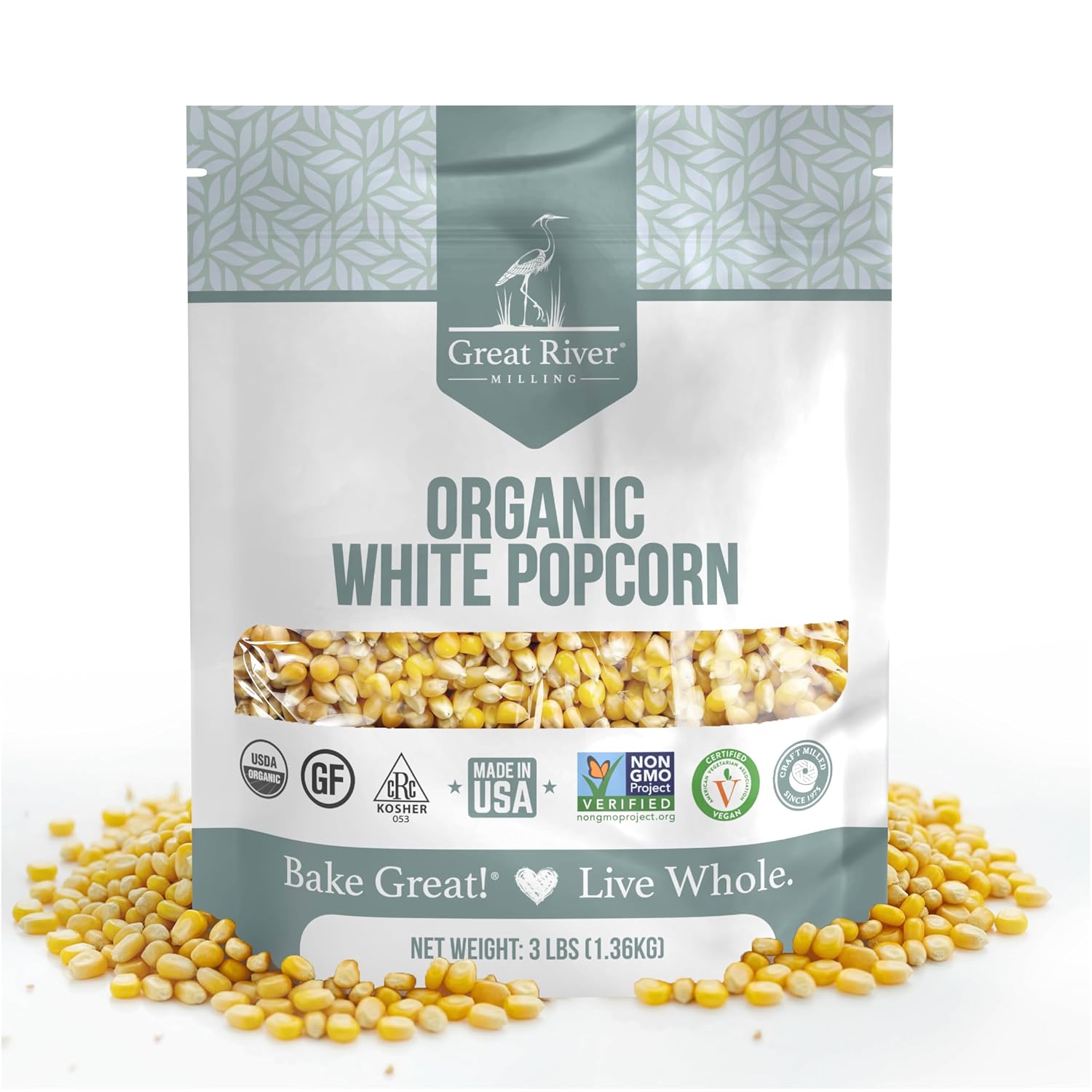
Great River Milling Organic White Popcorn Kernels, Whole Grain, 3 lb | White Popcorn Kernels for stovetop popping, air poppers, Whirley Pop, kettle corn and popcorn machines; smaller tender
Great River Milling Organic White Popcorn Kernels, Whole Grain, 3 lb pops into tender, flavorful popcorn that's perfect for movie nights, snacks and entertaining. This 3 lb bag is produced with carefully selected ingredients for consistent results in home kitchens, bakeries and foodservice applications. Non-GMO, Kosher Certified. Reseal after opening and store in a cool, dry place to help preserve freshness.
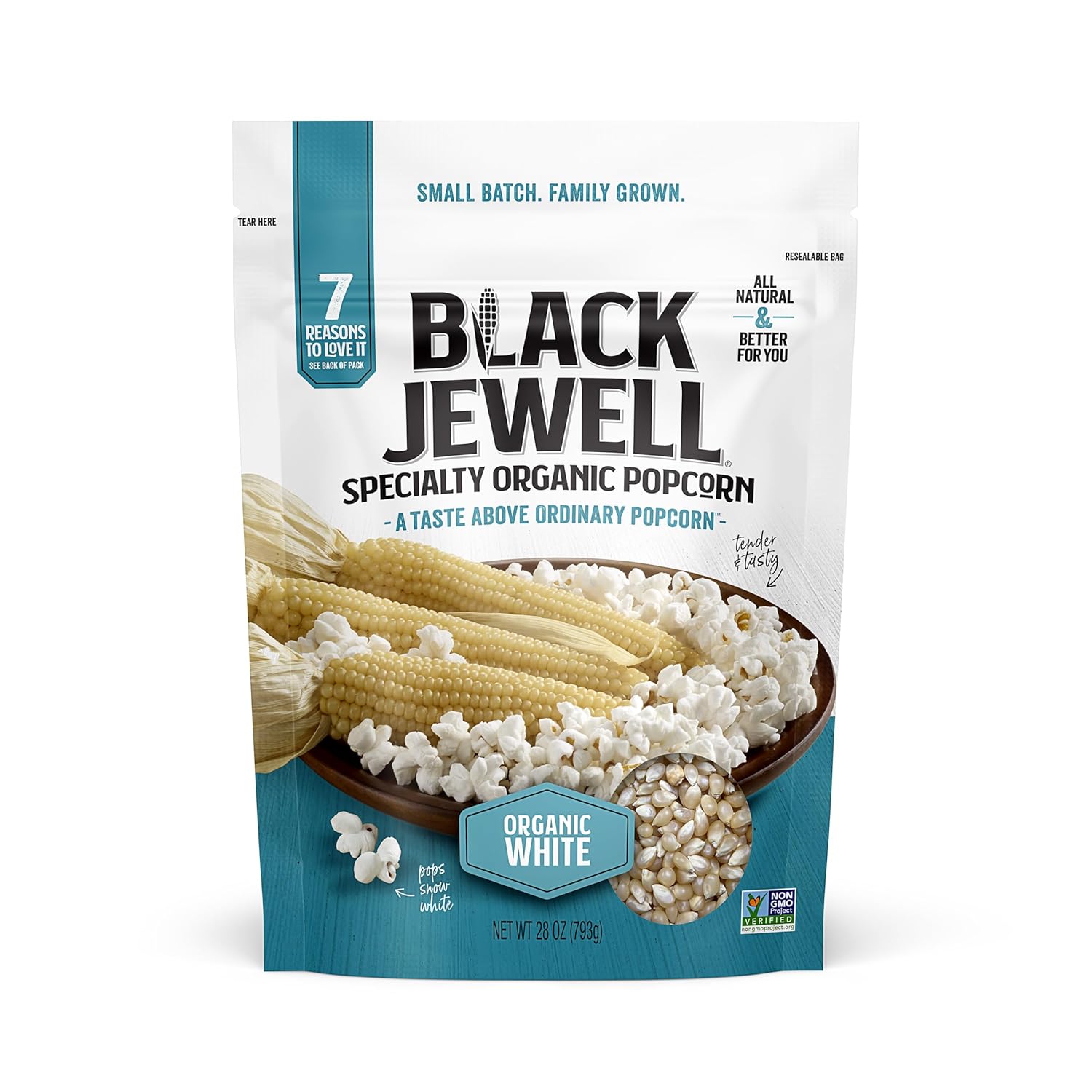
Black Jewell Organic Popcorn, Organic Select White, 28.35oz (Pack of 1)
Don’t settle for ordinary popcorn. Black Jewell Gourmet Specialty Popcorn offers unique heirloom and heritage popcorn with a fresh, crispy crunch and a richer popcorn taste. Our popcorn is responsibly grown on family farms in the Midwest and crafted in small batches.
Hunza Organic White Popcorn (2 lbs) A classic American treat, popcorn can be enjoyed around the campfire or on the couch while watching a favorite movie. - These popcorn kernels are certified USDA Organic. They are also non-GMO, with no additives or preservatives. - White popcorn has a mixture of fiber and whole grains. It is also very low in calories. - Popcorn contains antioxidants and tryptophan, which is an amino acid that helps people to sleep more easily. - Comes packaged in a high-quality green stand-up pouch for convenience and durability. Interested in trying delicious White Popcorn? Click "Add to Cart" and soon you will be able to savor these healthy kernels!
Organic White Popcorn Kernels 6 lb Bag, Non-GMO, Sodium-Free, Pesticide-Free, Unsalted, Plant-Based, Sugar-Free, Old Fashioned Regenerative-Farmed Large Popcorn From Olde World Popcorn
Who are we? Well, we seek out the finest natural and organic foods available, maintain the strictest quality standards in the industry, and have an unshakeable commitment to sustainable agriculture. We ban 300+ ingredients from all food that we sell, including hydrogenated fats, high-fructose corn syrup and sweeteners such as aspartame, sucralose and saccharin, so you can skip deciphering ingredient labels and cut to relishing your finds. Our 365 by Whole Foods Market brand offers over 2,500 affordably priced and thoughtfully sourced products that not only meet our already strict standards, but also in many cases go above and beyond what we require of other brands.
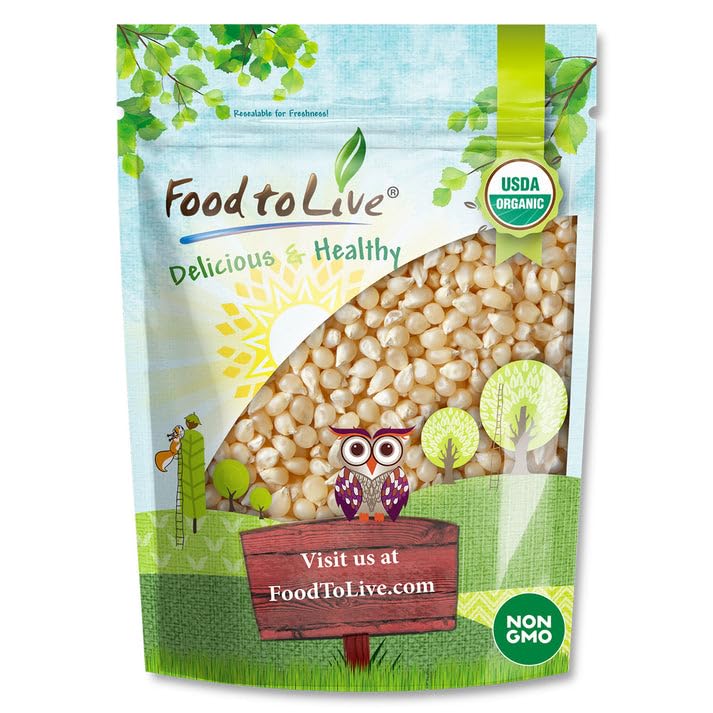
Food to Live Organic White Popcorn Kernels, 1 Pounds – Hulless Uncooked Whole Corn Ideal for Popping. USA Grown, USDA Certified. Non-GMO, Vegan, Kosher, Bul
Organic White Popcorn Kernels bring a classic and versatile snack straight to your kitchen. Known for their light texture and mild flavor, these kernels pop into fluffy pieces that can be enjoyed plain or customized with seasonings of your choice. They offer a simple way to prepare a satisfying snack at home, whether for movie nights, family gatherings, or quick bites throughout the day. Each batch of kernels is carefully selected to ensure consistent popping and a delicate crunch. White popcorn is often preferred for its tender texture compared to yellow varieties, making it a great option for those who enjoy a lighter snack. With their neutral flavor, the kernels can easily adapt to sweet or savory seasonings, giving you endless possibilities for creating a snack that suits your taste. Using Organic White Popcorn Kernels is easy and adaptable to different cooking methods. They can be popped on the stovetop with a small amount of oil, in an air popper, or in a popcorn machine. For variety, try tossing the freshly popped kernels with herbs, spices, or cheese for a savory option, or drizzle with chocolate or caramel for a sweet treat. Popcorn can also be used creatively in recipes, such as crushed as a topping for casseroles or mixed into homemade snack bars. To maintain freshness, store the kernels in an airtight container in a cool, dry place. Proper storage helps preserve their natural flavor and ensures consistent popping results. Convenient, versatile, and easy to prepare, Organic White Popcorn Kernels are an excellent addition to your pantry for everyday snacking and creative cooking.
Yes, usually 30 to 60 percent more. But since popcorn kernels are already very cheap, that's only a few cents difference per serving.
Does organic corn taste different?
Honestly, barely. Popcorn is almost entirely starch, and flavor comes from oil, butter, and seasonings. Freshness and moisture content affect the result far more than the farming method.
Is there fair-trade popcorn corn too?
Occasionally, mostly with corn sourced from South America. But the combination of organic plus fair-trade isn't common for popcorn kernels - the selection is much smaller than for something like coffee or cocoa.
What's the difference between USDA Organic and Demeter?
USDA Organic is the legal baseline standard. Demeter is a stricter certification that requires biodynamic farming practices with additional requirements, like on-farm closed-loop systems.
Is organic popcorn corn automatically non-GMO?
Yes. Genetically modified seed is excluded from certified organic farming - genuinely relevant for corn, since it's one of the most widely genetically modified crops grown worldwide.
Does organic corn pop just as well?
Yes, farming method has no effect on that. Moisture content and storage are what matter - and since organic kernels are often sold in paper packaging, transferring them to an airtight jar pays off even more.
More important than organic: the right variety for your recipe.
We only use technically necessary cookies. With your permission, we also use Google Analytics to improve the site - you can change your choice anytime. See our privacy policy for details, including your California privacy rights.