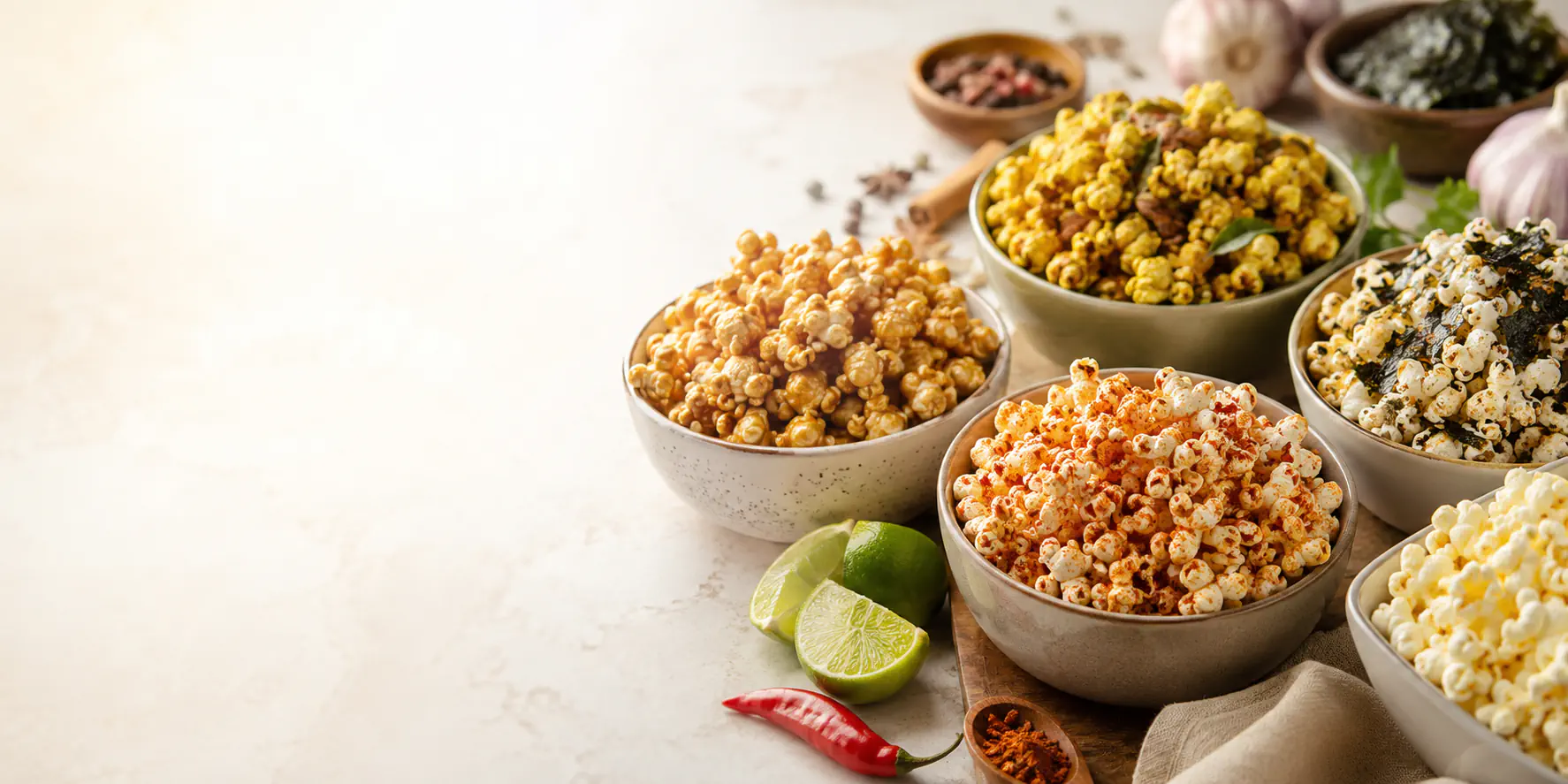
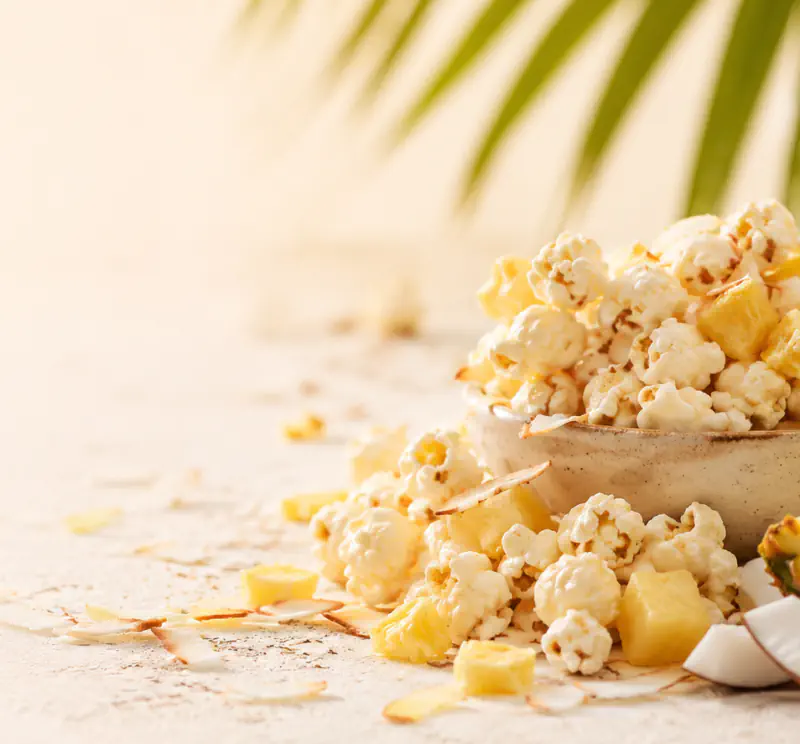
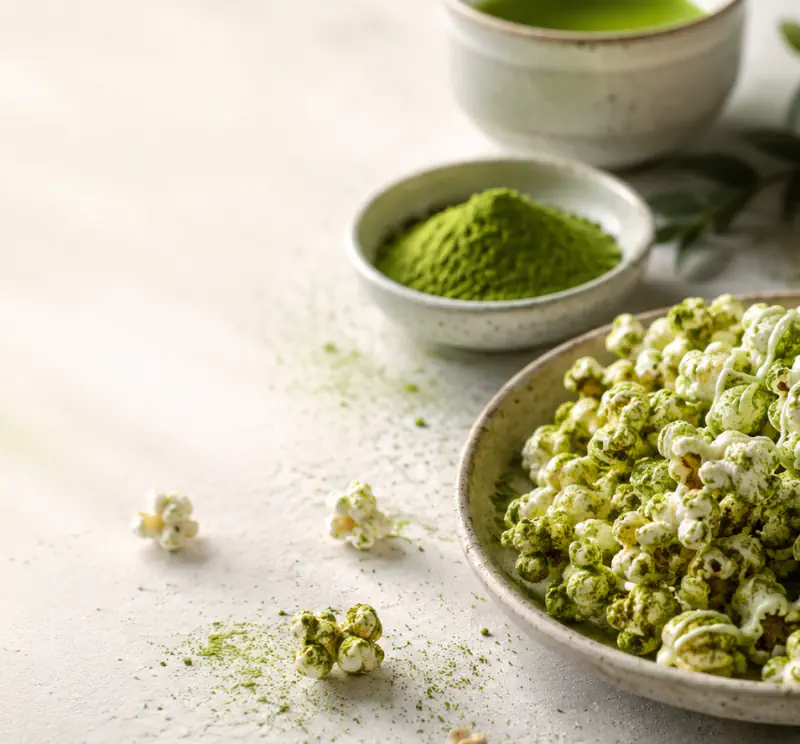
In short: Popcorn is at home everywhere, but it's seasoned differently everywhere: sweet-and-salty kettle corn in the US, elote-style with chili, lime, and cheese in Mexico, masala spice blends in India, soy sauce and nori in East Asia. Europe came to popcorn comparatively late.
✨
Sweet or salty? A question of geography
Whether popcorn defaults to sweet or salty says a surprising amount about a country. In the US, salty buttered popcorn is the movie-theater standard, and sweet is more of a specialty item. In Germany, it was the exact opposite for decades: popcorn at the movies meant sweet almost automatically. Anyone visiting a theater in the other country for the first time is often in for a small flavor surprise.
The popcorn world map
Tap a pin and discover how that country seasons its popcorn - including a recipe to try.
🇺🇸
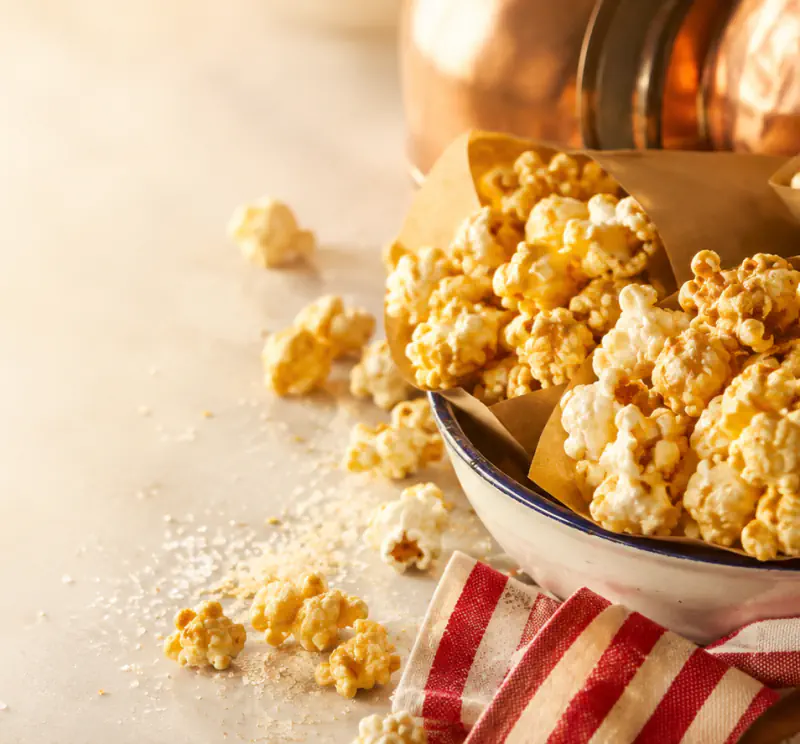
USA - Kettle Corn & Movie-Theater Butter
The birthplace of modern popcorn culture. At fairs, sweet-and-salty kettle corn is made in a copper kettle; at the movies, buttery popcorn rules. From here, popcorn began its march around the world.
Make kettle corn →
🇲🇽
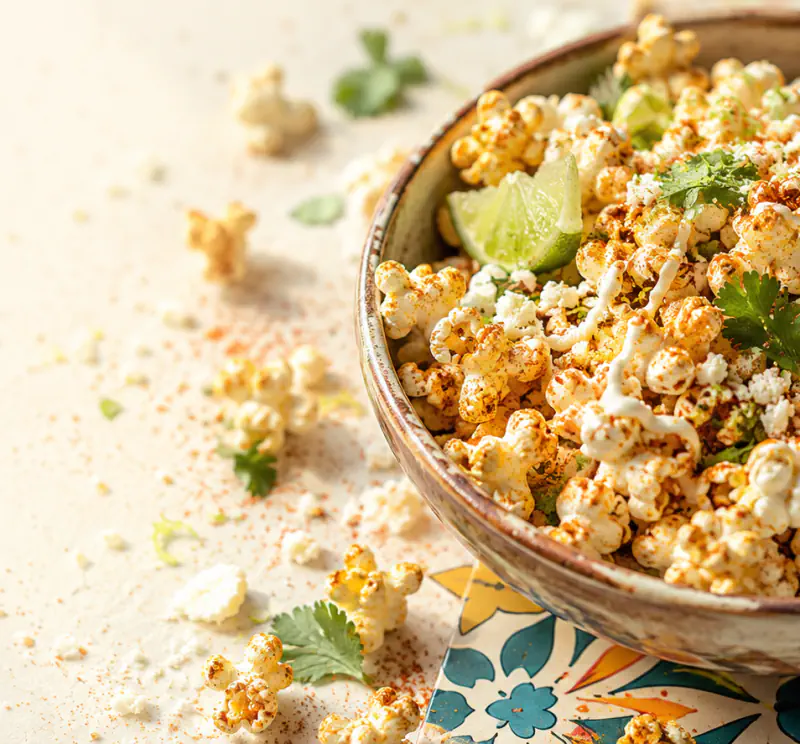
Mexico - Elote-Style Popcorn
Inspired by elote, the grilled-corn street snack, popcorn here gets dressed up with chili powder, lime juice, and salty cotija cheese. Spicy, tangy, savory: a completely different popcorn experience.
Elote-Style Popcorn →
🇮🇳
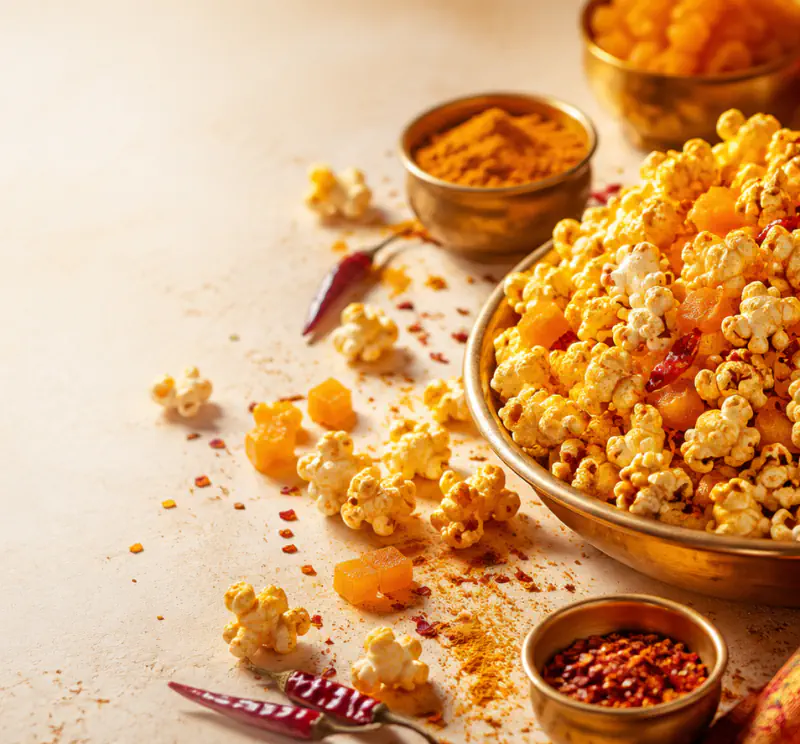
India - Masala Popcorn
In India, popcorn meets the local spice cabinet: chaat masala, turmeric, cumin, and chili turn the bowl into a spicy fireworks show. Popcorn is a popular, cheap street snack here.
Spicy Curry Popcorn →
🇰🇷
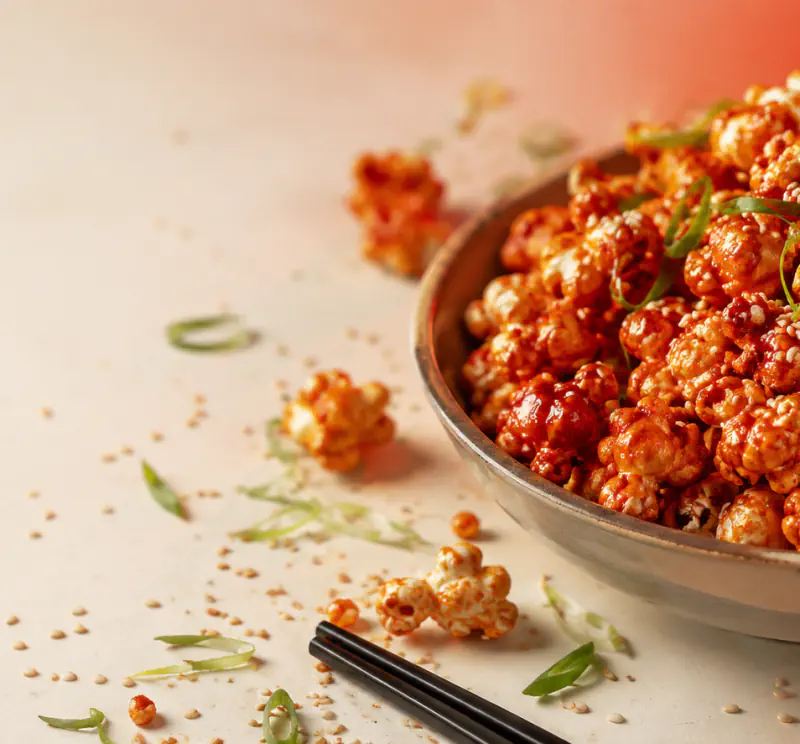
South Korea - Sweet-Spicy & Fermented
East Asia loves working with umami and heat. Gochujang, the fermented chili paste, gives popcorn a sweet-spicy-savory note straight out of Korean cooking.
Gochujang Popcorn →
🇩🇪
Germany - Late to the Party, But All In
In Europe and Germany, popcorn only caught on with the spread of movie theaters in the 20th century - noticeably later than in the US. But it's firmly established today: sweet at the movies, salty at home. A fun contrast to American movie-theater habits, where salty rules.
Movie-Theater-Style Popcorn →
Why the same kernel tastes so different
Popping corn is practically identical worldwide - what differs is everything that comes after. Every food culture brings its own base ingredients: sugar and butter in the US, chili and lime in Mexico, complex spice blends in India, soy sauce and fermented pastes in East Asia.
That's exactly what makes popcorn such a rewarding culinary souvenir: you don't need exotic ingredients to cook your way around the world - often just a different spice from the cabinet turns the familiar movie-theater snack into something completely new.
USA - where modern popcorn culture began
No country is as closely tied to popcorn as the US. Kettle corn was born at 19th-century fairs: corn, sugar, and salt cooked together in a hot kettle, giving it that signature sweet-and-salty flavor and crackly sugar crust. At the movies, buttered popcorn became the standard.
American per-capita popcorn consumption is among the highest in the world. Both the snack culture and the popcorn-machine technology behind it spread around the globe from here.
Latin America - chili, lime, and cheese
In Mexico, corn is a staple food with a tradition thousands of years old, so it's no surprise how naturally it's used. Popcorn is often seasoned in the style of elote, the classic street snack: chili powder, a splash of lime, and salty, crumbly cotija cheese. Ready-made chili-lime seasoning blends make it easy to replicate at home, too.
The result is a flavor combination that can feel unfamiliar at first and often turns surprisingly addictive: the sweetness of the corn, the tang of the lime, the heat of the chili, and the saltiness of the cheese, all at once.
Asia - from masala to soy sauce
In India, popcorn is a widespread, cheap snack, often seasoned with the same spices used in other dishes: chaat masala, turmeric, cumin, and chili. In East Asia, the trend leans more toward savory umami: soy sauce, nori sheets, or fermented chili pastes like Korean gochujang give popcorn a flavor all its own.
What stands out across Asia is how often the line between sweet and savory blurs - sweet-salty and sweet-spicy combinations feel much more natural there than in typical American snack culture.
Europe - the late arrival to popcorn
Compared to America, Europe came to popcorn late. It only became a popular snack there with the spread of movie theaters in the 20th century, and for a long time it was seen almost exclusively as movie-theater fare. In Germany, sweet popcorn dominated for decades, in contrast to the salty norm in American theaters.
Today that's shifted: home-theater and DIY culture have brought popcorn into European living rooms too, and spicy or international varieties are gaining fans. Our history of popcorn tells the full story of how that happened.