In short: Popcorn is one of the oldest snacks in human history: finds in the Americas date back thousands of years. It became a mass phenomenon thanks to the mobile popcorn machine (Charles Cretors, 1885) and the movie-theater boom of the 1930s. Microwave popcorn made it a living-room staple for good starting in the 1980s.
A snack older than most civilizations
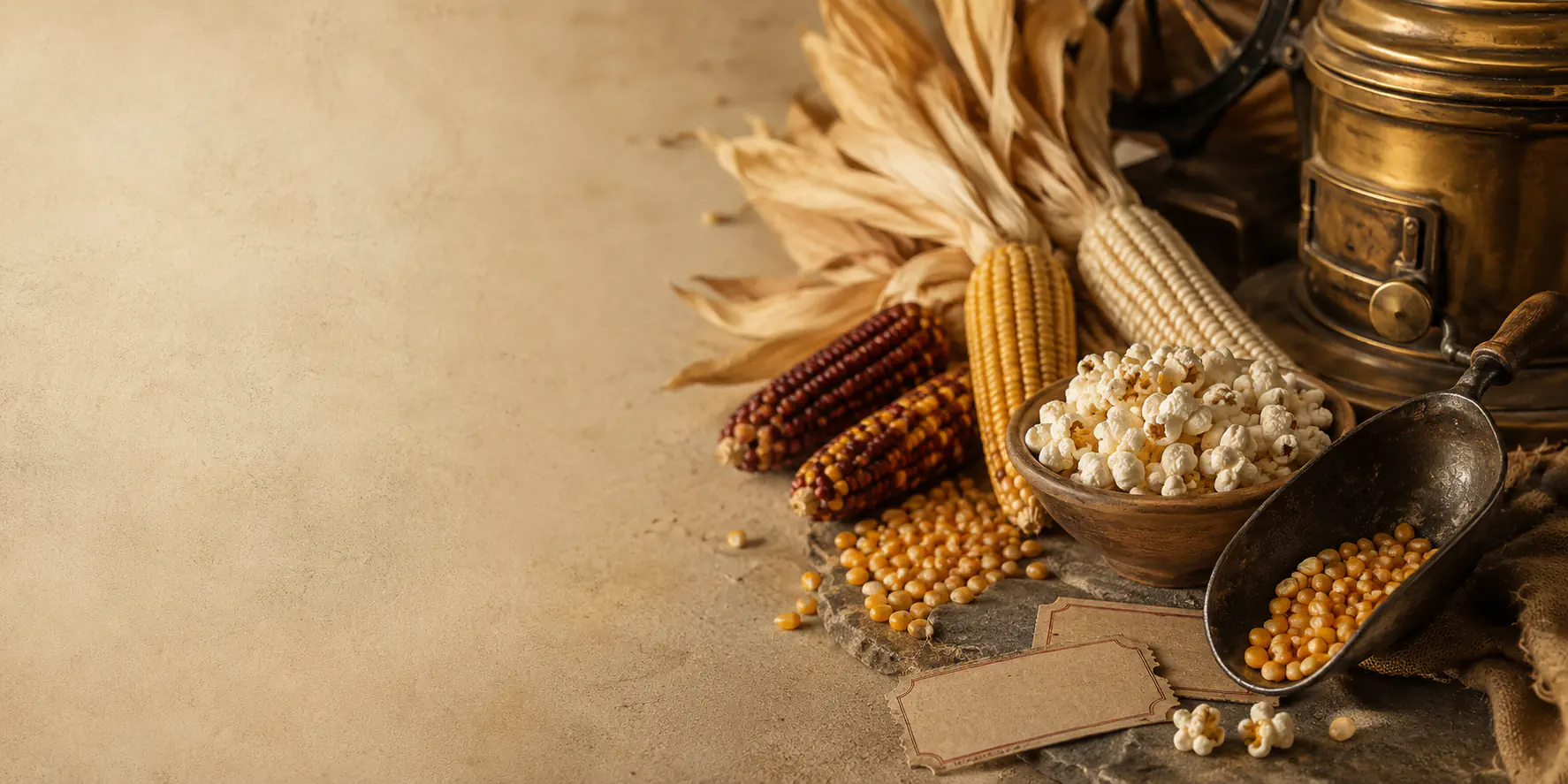
While we think of popcorn today alongside movie theaters and TV nights, its history goes back thousands of years. It's one of the oldest known ways of preparing corn for eating, and it's been part of life in the Americas since prehistoric times.
The timeline below covers the key milestones - from the archaeological find to the snack in your microwave.
The milestones of popcorn history
Thousands of years ago
Popping corn is grown and popped in the Americas. Archaeological finds show popcorn is one of the oldest known ways corn was prepared for eating.
Pre-colonial era
Popcorn is used, both culinarily and in some cases ritually, by various Indigenous peoples across the Americas - long before Europeans reach the continent.
16th century
European sailors encounter corn and how it's prepared, and bring the plant back to Europe. Popcorn itself stays largely an American phenomenon for a while longer.
1885
Charles Cretors builds the first mobile, steam-powered popcorn machine in Chicago. Popcorn becomes a street snack at fairs and outside theaters.
1893
At the World's Fair in Chicago, Cretors shows off his machine to a huge audience - a major boost for its spread.
1930s
During the Great Depression, popcorn becomes a movie-theater snack: it's cheap, and theater owners discover the enormous profit margin. Popcorn and movies become inseparable.
1940s
During World War II, sugar is scarce - candy becomes hard to find, but popcorn keeps booming and cements its role as America's snack.
1980s
Microwave popcorn hits the market. Popcorn can now be made at home in minutes, cementing its place as a mass-market living-room staple.
Today
Popcorn is popular worldwide - from gourmet snacks to international spice varieties to hot-air machines for health-conscious snacking.
✨
Popcorn saved more than a few theaters through hard times
During the Great Depression and later in World War II, popcorn was a lifeline for a lot of theaters. When sugar rationing made candy scarce, audiences turned to affordable popcorn instead. Theaters that ran a popcorn stand often came through those hard years in much better financial shape than those that didn't. The snack wasn't just a side attraction - for a while, it was the financial backbone of the movie business.
The oldest finds
The story of popcorn doesn't start at the movies - it starts in the ground. Archaeologists have found popcorn and popping-corn remains in the Americas dated to several thousand years old. Some of these finds were so well preserved that the signature popped shape was still recognizable.
That makes popcorn one of the oldest documented ways of preparing corn for eating. People discovered early on that certain hard corn kernels burst open under heat and become edible - knowledge passed down across generations.
Popcorn among Indigenous peoples of the Americas
Long before Europeans arrived, popcorn was known to various Indigenous peoples across the Americas. It was prepared in different ways - for example, by holding whole ears close to the embers, or popping kernels in heated sand.
Popcorn's significance wasn't purely culinary; it held cultural meaning too in some contexts, and there's evidence it played a role on certain occasions. That long, deeply rooted tradition is why popcorn is considered one of the most quintessentially American foods there is.
The fairground era and Cretors' invention
Popcorn made the leap from a traditional food to a commercial snack at the end of the 19th century. In 1885, Charles Cretors built the first mobile, steam-powered popcorn machine in Chicago. It could be wheeled around on a cart and popped the corn evenly in oil - a huge leap forward from earlier methods.
Suddenly, popcorn could be sold fresh, in volume, anywhere people gathered: at fairs, festivals, and outside theaters. The irresistible smell and low price quickly made it a popular street snack. Cretors' machine laid the foundation for everything that followed.
How popcorn conquered the movies
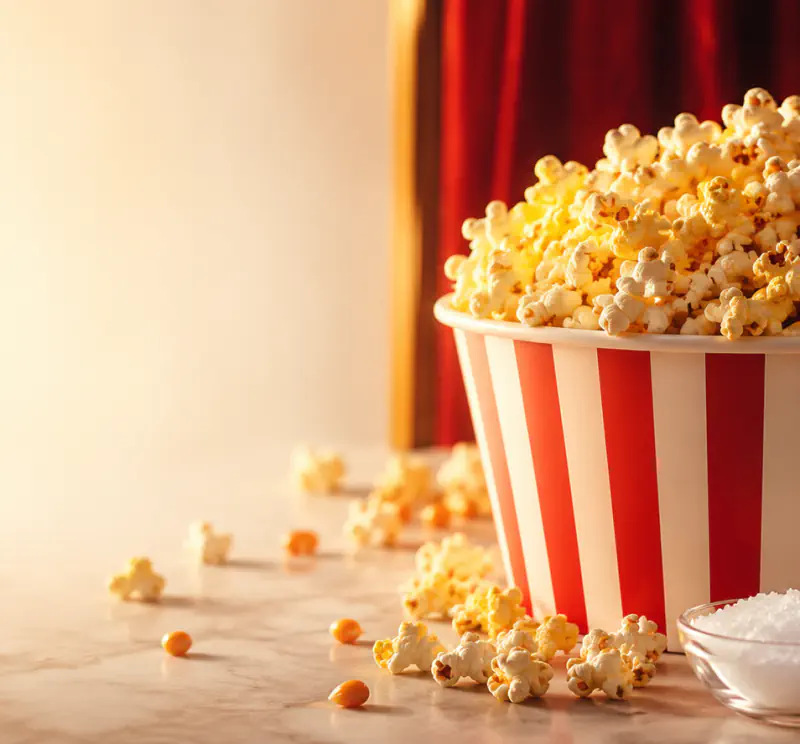
The fact that popcorn and movie theaters are inseparable today is no accident - it's a direct result of the Great Depression in the 1930s. At a time when most people had to cut back on spending, a bag of popcorn was one of the few affordable pleasures left.
At first, popcorn vendors stood outside theaters, not inside - some theater owners were wary of the crumbly snack. But once they noticed the profit margin, they brought the stands indoors. Popcorn became the biggest revenue source for a lot of theaters, often more profitable than the tickets themselves. That bond holds to this day.
From the theater to the living room
The second major revolution was technological. As microwaves spread through American kitchens in the 1980s, microwave popcorn hit the market - pre-portioned in a bag, ready in minutes. Popcorn was no longer tied to a theater or a fair; it was available at home any time.
At the same time, home-theater culture took off, and popcorn became a fixture of TV and movie nights. More recently, hot-air machines for health-conscious snacking and a growing range of gourmet and spice varieties have joined the mix.
Popcorn as an American icon today
Popcorn's American roots run deep enough that Illinois - the same state where Charles Cretors built his first machine in Chicago - officially named popcorn its state snack food in 2003. The Cretors company he founded is still around today, still building popcorn equipment more than a century later.
That blend of street-fair history, Depression-era resilience, and movie-theater tradition is why popcorn reads as more than just a snack in American culture - it's tied to county fairs, drive-in theaters, and Friday night movies alike, a thread running from a Chicago street cart all the way to your living room.