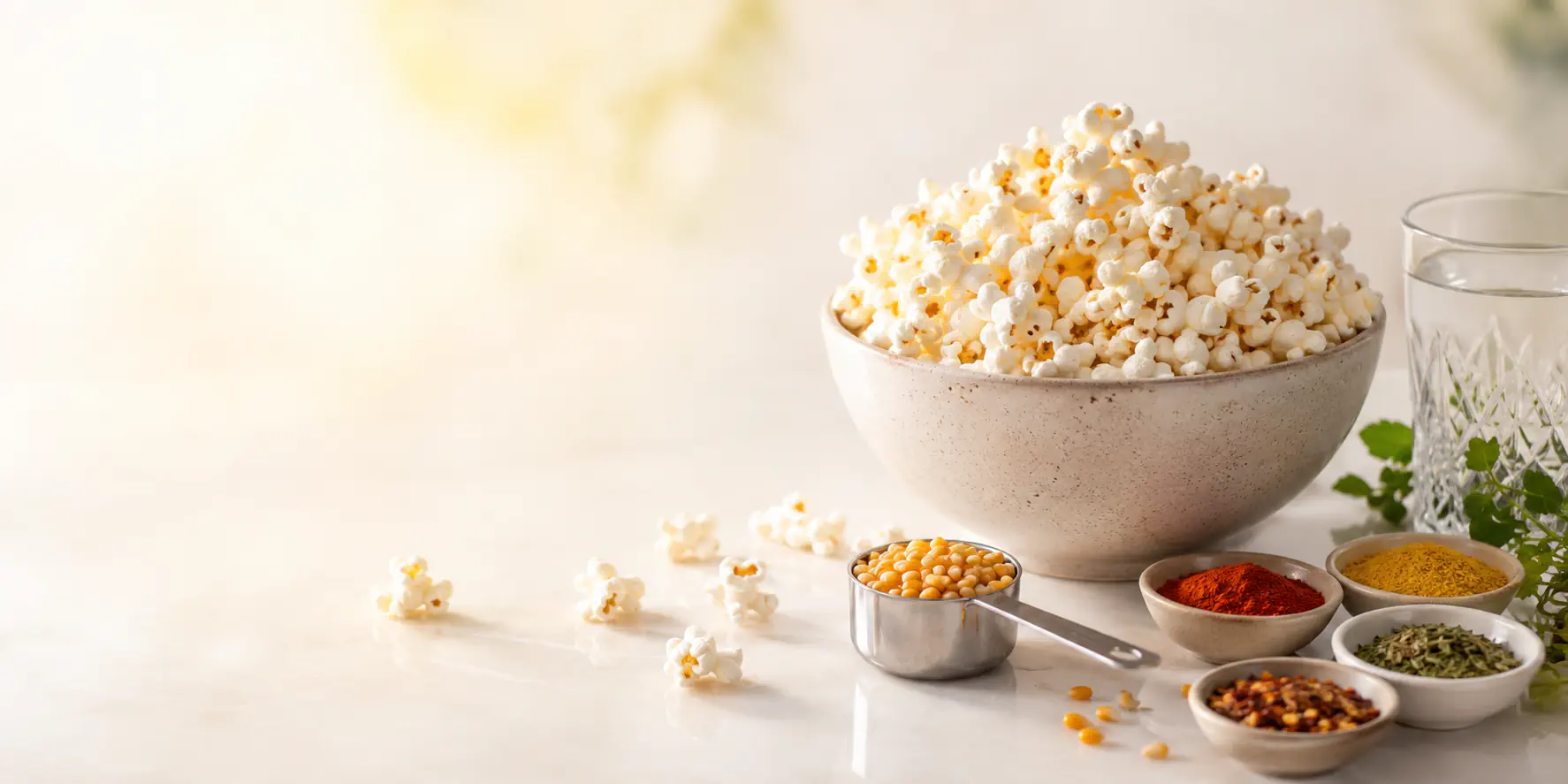
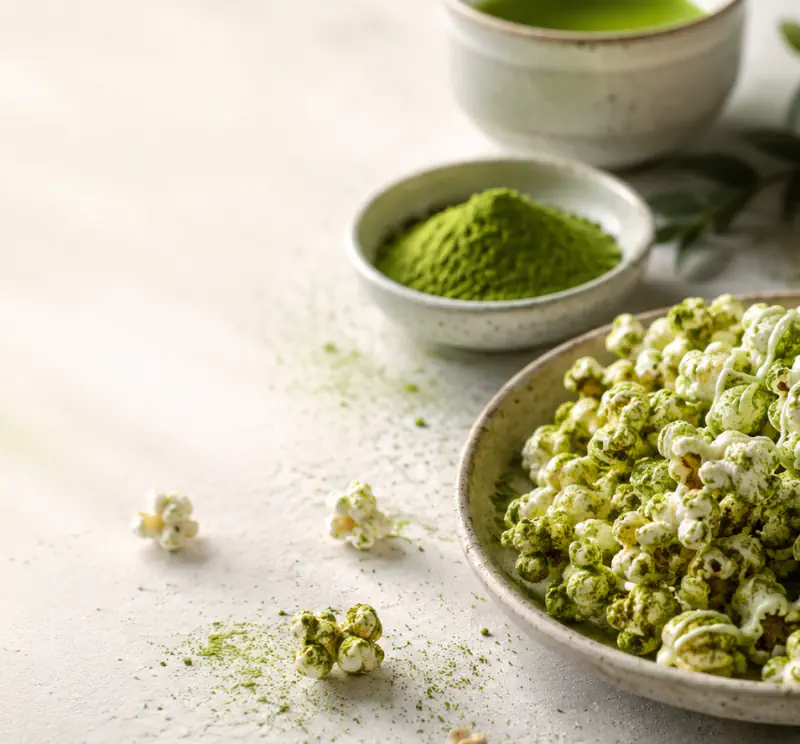
Popcorn isn't a miracle food - but it's one of the few snacks where a big bowl and a small calorie count actually go together.
🥣 ~75 Cal per bowl
🌾 Fiber keeps you full
💨 Best made with hot air
Why it works
Popcorn as a diet snack, by the numbers
0 Cal
In a well-filled bowl of air-popped popcorn (about 20 g)
0 liters
Of volume you get for 100 calories - with chocolate, it's 14 ml
0 Cal
Saved per batch just by skipping the oil
0 g fiber
Already in a normal serving
Featured Product
Our Top Pick
Dash Fresh Pop Popcorn Maker, 16-Cup Hot Air Popper, White | Electric Popcorn Machine, Oil-Free Air Popped Popcorn, Built-In Measuring Cup & Butter Melting Tray, Movie Night Snacks
Experience the joy of fresh, homemade popcorn with the Dash Fresh Pop Popcorn Maker, your ultimate electric popcorn maker for every occasion. This oil-free popcorn maker uses hot air technology to provide a healthier snacking alternative, allowing you to enjoy all the flavor of theater-style popcorn without any added oils or preservatives. As a 16 cup popcorn maker, it’s perfect for family gatherings, parties, or a cozy movie night at home, delivering a generous batch of fluffy, delicious popcorn in just minutes. The Dash Popcorn Popper is a fast popping popcorn solution, ensuring you never have to wait long to satisfy your cravings. Designed for convenience and ease of use, this movie night popcorn maker features an included measuring cup, allowing you to perfectly portion your kernels for each batch. The removable butter melting tray transforms this healthy popcorn maker into a buttery popcorn maker with little effort—simply add your favorite butter or toppings, and enjoy a rich, melt-in-your-mouth experience. Its compact, space-saving design and countertop stability with non-slip feet make it a convenient popcorn maker that fits seamlessly into any kitchen, dorm, or office space. The components are designed for easy cleaning, so you can spend more time enjoying your snacks and less time on maintenance. Whether you're hosting a party, looking for a delicious fresh popcorn maker for family game night, or searching for a multi-functional popcorn maker for everyday use, this homemade popcorn machine delivers on every level. Enjoy fluffy, hot popcorn any time you want with this fresh pop popcorn maker, and make every night feel like a night out at the movies. We believe that taking small steps every day to live a healthier life can have a big impact. And that the best path to wellness is eating whole, natural foods. At Dash, we make products that make it easier for you to prepare and eat real food at home so that you can feel your best.
Convenient Popcorn Maker: Pop it like it’s hot; The Dash Fresh Pop Popcorn Maker cooks using only hot air, no oil necessary
Everything You Need: Enjoy theater-style popcorn with the popcorn machine, measuring cup, and recipe guide
Butter-Warming Tray: Our included measuring cup doubles as a butter-melting tray for delicious, flavorful popcorn
* Affiliate link: If you buy through it, we earn a small commission. The price stays the same for you.
In short: Unsweetened air-popped popcorn has very low energy density: lots of volume, few calories, plus fiber that keeps you full. That makes it a solid snack choice in a calorie-conscious diet. The only thing that matters is how you make it - popped without oil and sugar, seasoned instead of sweetened.
💡
The bowl trick
Weigh out 25 g of unpopped kernels once and pop them. The result surprises most people: it fills a large bowl and still comes out to only about 95 calories. Remember that visual - after that, you won't need a scale anymore, because you'll know by sight how little corn makes a filling serving.
Diet-friendly popcorn: the quick guide
Whether popcorn ends up a low-calorie, filling snack or a candy comes down to a few small choices.
✓ How to keep it light
Pop it with hot air - completely oil-free
Season after popping instead of sweetening beforehand: paprika, chili, herbs, curry powder
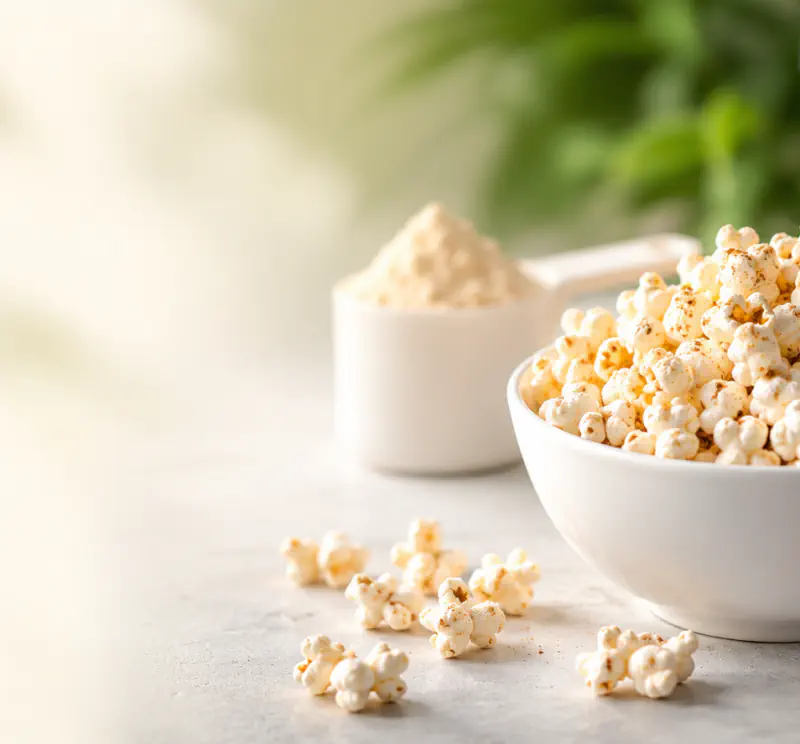
Nutritional yeast for a savory, cheesy flavor without any cheese
Weigh out your serving beforehand (20-30 g of kernels) instead of eating from the bulk bag
Pour it into a bowl - don't eat straight from the bag
Have a glass of water with it: fiber needs liquid to do its job
✕ What tips the balance
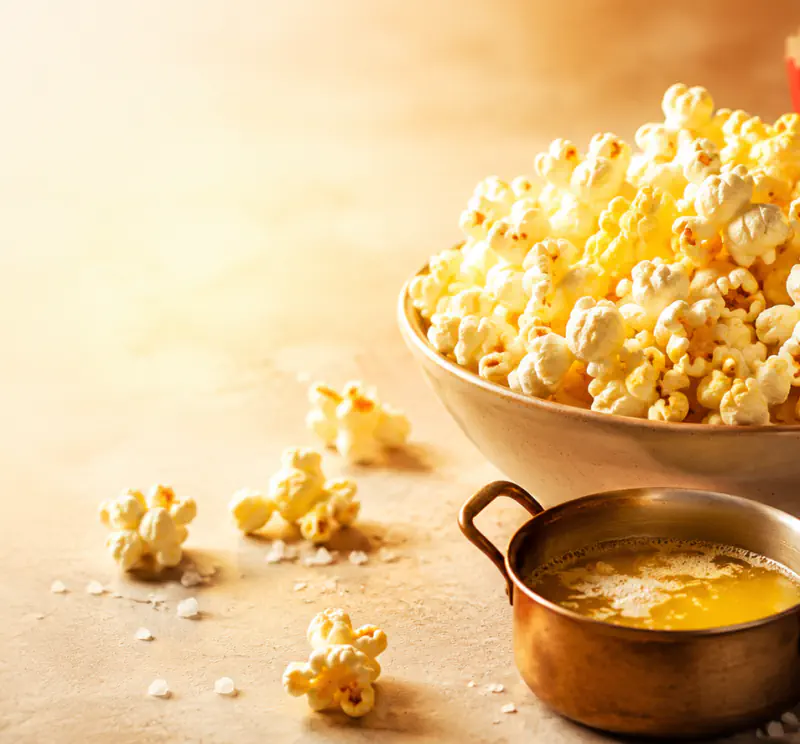
Pouring butter or a lot of oil over the finished popcorn
Caramel or sugar coatings - that turns it into candy
Grabbing pre-packaged microwave popcorn with butter flavoring without checking the label
Applying the per-100g nutrition label to your actual bowl
Treating popcorn as a meal replacement instead of a snack
Mindlessly eating in front of a screen without tracking the amount
These are general nutrition tips, not a substitute for individual dietary advice.
Why popcorn is a smart diet snack
The key concept here is energy density: how many calories are packed into a given volume. Feeling full isn't just about calories - it's strongly tied to how full your stomach actually is.
Popcorn has an unusually good combination going for it: the kernel expands to about 40 times its size when it pops, while barely adding any fat. For the same amount of energy, you get many times more bowl volume than you would with chips or chocolate. On top of that, about 14 g of fiber per 100 g swells up in your stomach and slows digestion.
Popcorn is whole grain - and that's what makes it interesting
What a lot of people miss: popcorn isn't an empty starchy snack - it's a genuine whole-grain food. The kernel isn't hulled or milled when it pops; it bursts open as a whole kernel, germ, hull, and starchy interior included.
That's exactly why plain popcorn delivers more fiber and more bite than a lot of other snacks. For a diet, that matters because fiber increases volume in your stomach, digests more slowly, and helps a serving feel filling for longer. But that whole-grain advantage only applies to the base product: butter, oil, caramel, or a thick sugar coating quickly turn it back into candy.
How you make it is still the deciding factor
Everything that makes popcorn a diet-friendly snack can be undone with two ingredients: fat and sugar. One tablespoon of oil adds about 90 calories, and caramel popcorn runs around 40 g of sugar per 100 g.
The practical takeaway is simple: hot air instead of a pot, and season after popping, not before. If you don't have a hot-air machine, a pot works fine too with one teaspoon of oil instead of several tablespoons - that's enough to keep anything from burning.
Popcorn as a craving buffer
A practical trick from nutrition counseling: eat a small portion of fiber-rich food about 20 to 30 minutes before your main meal. The fiber swells up and takes the edge off your hunger, so the actual meal ends up smaller.
Popcorn works well for this because it's quick to make and noticeably filling even in a small amount. The emphasis is on small, though - a handful, not a whole bowl, or the snack replaces the meal instead of complementing it.
Season instead of sweeten: the flavor toolkit
The most common complaint about unsweetened popcorn is that it tastes like nothing. That's true for plain popcorn with nothing on it - but it's an easy fix with essentially zero added calories.
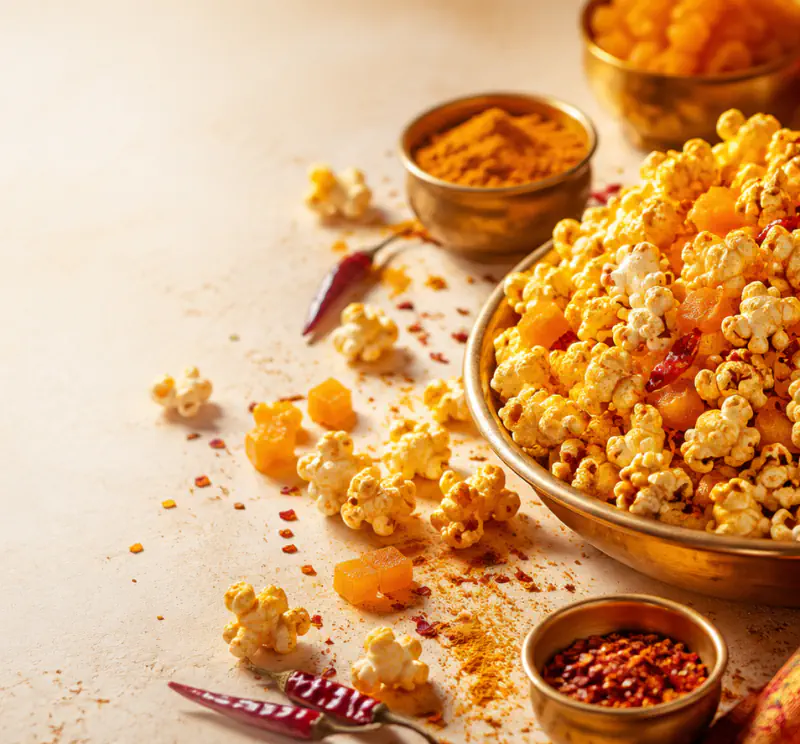
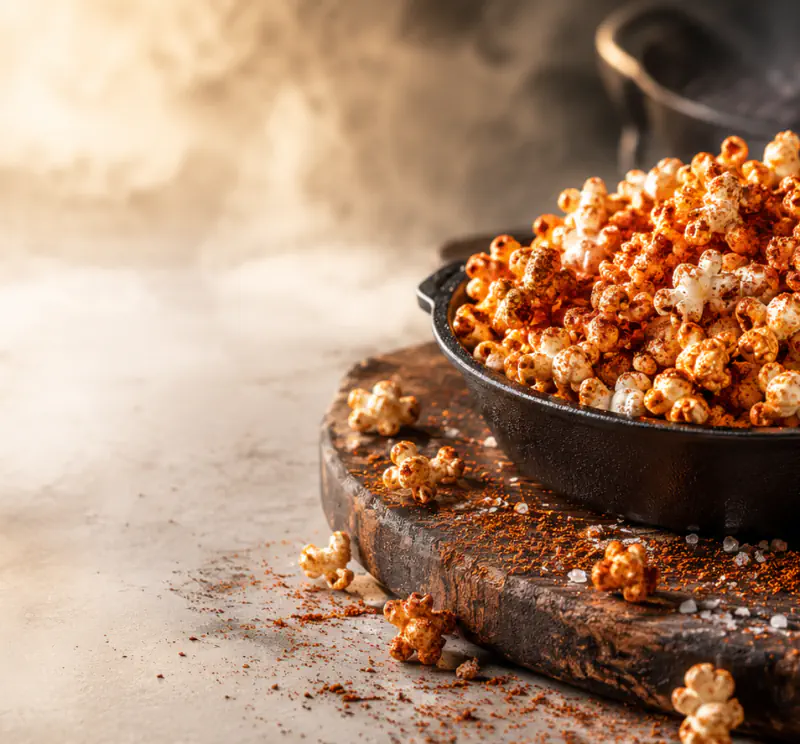
Smoked paprika, chili, curry powder, garlic granules, Italian herbs, or a pinch of cinnamon all work well. Nutritional yeast adds a savory, cheesy note without any dairy. A light mist of water or a splash of lemon juice helps seasonings stick without needing any oil.
What the popcorn diet explicitly isn't
Honesty matters more than marketing here: there's no "popcorn diet" in the sense of a nutrition program where popcorn alone makes you lose weight. Relying mostly on a single food risks an unbalanced nutrient intake.
What popcorn actually does is more modest and more concrete: it swaps out higher-calorie snacks for a comparable or better feeling of fullness. That's exactly where its value lies in a calorie-conscious diet - as one piece of the picture, not a program on its own. For health questions or bigger dietary changes, a doctor or registered dietitian is the right place to turn.
Pros
A very large serving for very few calories
Fiber keeps you full for longer
Quick to make and very cheap
Endlessly customizable on flavor
Cons
Only genuinely low-calorie when unsweetened and low-fat
Anthony’s Organic Yellow Popcorn Kernels are just the thing for a weekend movie night.
They pop up perfectly on the stove, in an air popper, or even in the microwave. The popped kernels are large, fluffy, and perfectly crisp.
They are delicious with butter and salt, or you can get creative and use one of the recipes below to make homemade sweet or savory flavored popcorn.
Our Organic Yellow Popcorn Kernels are grown locally in California and also packaged in California.
Since these popcorn kernels are Organic, they are inherently Non-GMO, and are also Gluten Free.
Each batch is tested and verified to be Gluten Free, in fact!
Ingredients:
10 cups popped Anthony’s Yellow Popcorn Kernels
¼ cup butter, melted
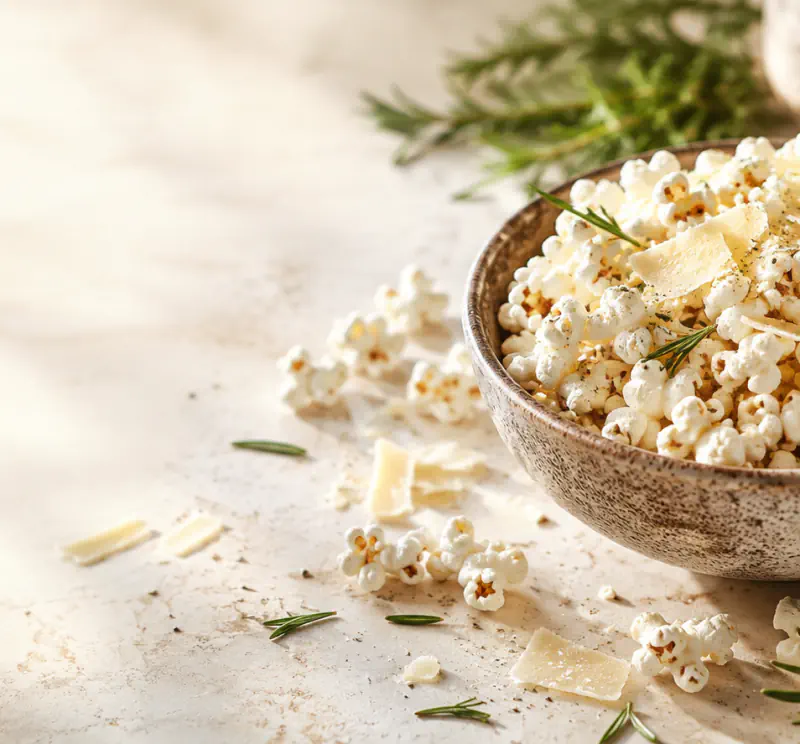
⅓ cup Parmesan cheese
2 tsp Italian seasoning
½ tsp garlic powder
½ tsp onion powder
Ingredients:
1/2 cup Anthony's Yellow Popcorn Kernels, popped
Salt to taste
½ cup Anthony’s Coconut Sugar
3 tbsp water
3 tbsp Anthony’s Coconut Oil
Ingredients:
8 cups popped Anthony’s Goods Yellow Popcorn
3 tbsp butter, melted
1 tbsp chili powder
3-4 tbsp Anthony’s Cheese Powder
We started this journey to bring simplicity, affordability, and accessibility to healthy ingredients to you. Our product family is growing, all thanks to your input. We're like a tight knit family, and your opinions mean the world to us. Join us for good vibes and a pantry filled with goodies!
Organic Popcorn Kernels Bulk - Unpopped Hulles Popcorn Seeds for Popping | Yellow Corn 4.8lb — Healthy Microwave Snacks Great for Movie Night — USA Grown, USDA Certified, Vegan, Non-GMO
Our organic delicious, non-GMO popcorn kernels that are ready in minutes to deliver all the crunch-tastic flavor you love in classic popcorn with none of the synthetic ingredients, GMOs, or additives found in many popcorn products.
Our popcorn bag makes enough popcorn for all your movie nights. You can easily make these unpopped popcorn kernels with a popcorn machine or popcorn maker, cook it on the stove, or pop in the microwave. Add butter, cheese, or sea salt for extra flavor!
We believe in bringing the highest quality kernels directly to our customer. We source from local family owned farms in Iowa to bring top quality certified organic popping corn kernels. Our popping corn is a healthy snack - non GMO, gluten free, and high in natural fiber.
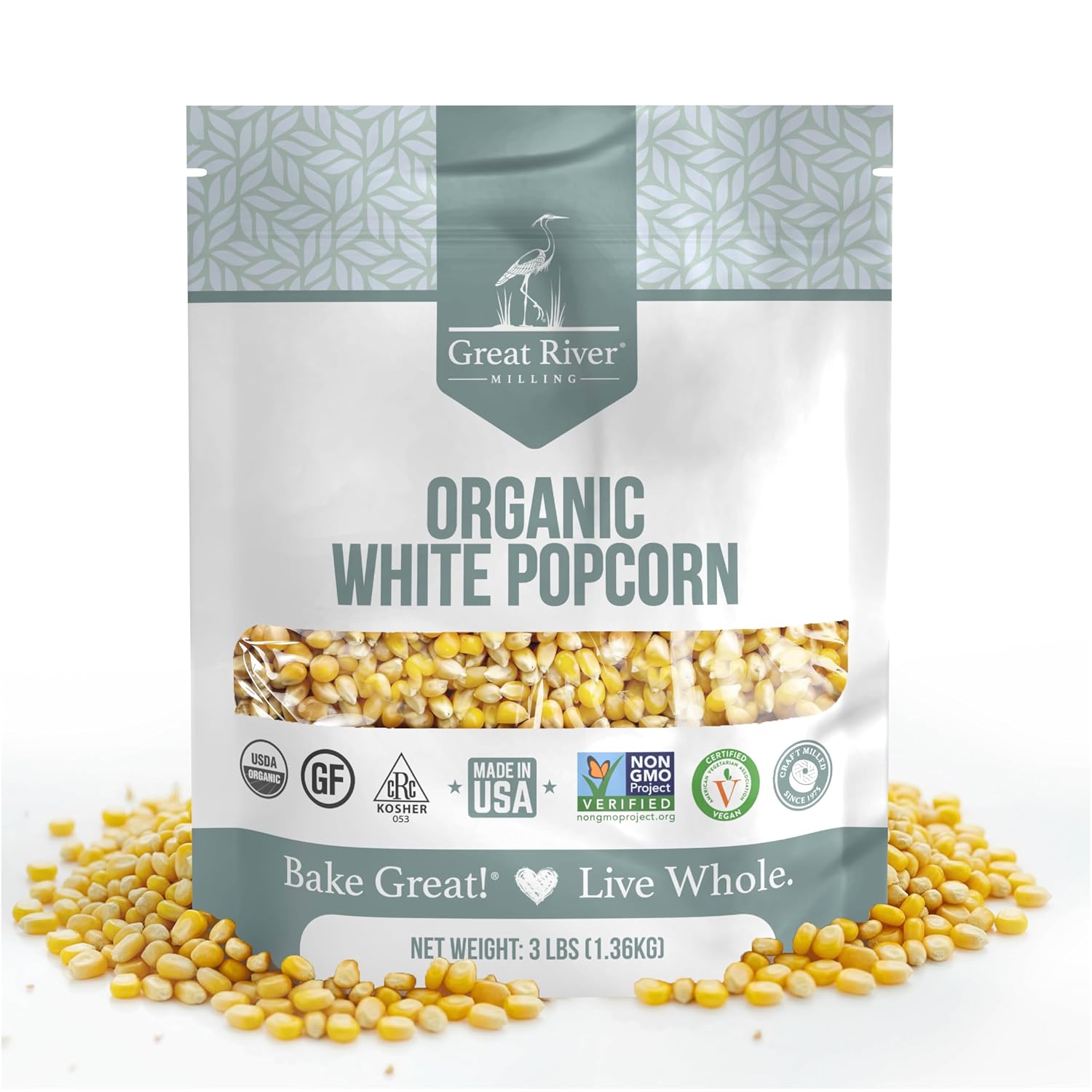
Great River Milling Organic White Popcorn Kernels, Whole Grain, 3 lb | White Popcorn Kernels for stovetop popping, air poppers, Whirley Pop, kettle corn and popcorn machines; smaller tender
Great River Milling Organic White Popcorn Kernels, Whole Grain, 3 lb pops into tender, flavorful popcorn that's perfect for movie nights, snacks and entertaining. This 3 lb bag is produced with carefully selected ingredients for consistent results in home kitchens, bakeries and foodservice applications. Non-GMO, Kosher Certified. Reseal after opening and store in a cool, dry place to help preserve freshness.
Orville Redenbacher’s Skinnygirl Microwave Popcorn, Butter & Sea Salt Popcorn, 4g Fiber Per Serving, 1.5 oz., 10-Count
Orville Redenbacher's-the only leading brand that uses real butter* and the only leading brand of microwave popcorn with no artificial preservatives, flavors, or dyes in all of our products-has teamed up with Skinnygirl to bring you a light twist on popcorn. With high-quality ingredients and 160 calories per serving, Skinnygirl Butter & Sea Salt Popcorn is a gluten-free snack you can feel good about. And with perfectly portioned popcorn mini bags, you can microwave and enjoy them anytime, anywhere-like during your next girls' night. This classic butter blend has just a hint of sea salt, making it one of those quintessential popcorn supplies for your pantry. No guilt, no hassle-just a tasty, skinny popcorn treat. * Select products contain real butter. See package ingredients for details.
A well-filled bowl of air-popped, unsweetened popcorn weighs about 20 g and comes out to roughly 75 calories. You'll find every number in detail on our calories & nutrition page.
Can I eat popcorn every night and still lose weight?
That depends on your overall balance, not the popcorn itself. An unsweetened 20-30 g serving is low enough in calories to fit into most plans easily - as long as it replaces another snack instead of adding to it.
Is sweet popcorn completely off-limits?
No. It's just candy nutritionally speaking, and should be planned for as such. If you like the sweet taste, try a pinch of cinnamon or a little coconut sugar instead of a thick caramel coating.
Does popcorn actually keep you full?
Surprisingly well for its calorie count. That comes from the combination of large volume and about 14 g of fiber per 100 g, which swells up in your stomach and slows digestion.
Hot air or a pot - does it make a big difference?
Yes, that's the single biggest lever. One tablespoon of oil in a pot adds about 90 calories per batch. For a 20 g serving, that can nearly double the calorie count.
Is popcorn okay to eat at night?
From a nutrition standpoint, your daily total matters, not the clock. If you snack in the evening anyway, swapping in unsweetened popcorn trades a higher-calorie option for a noticeably lighter one.
Does popcorn make you gain weight?
Unsweetened air-popped popcorn, no, as long as the serving stays realistic - its energy density is too low for that. What actually adds the weight is what often gets added on: butter, oil, or a sugar coating can easily double or triple a serving's calorie count.
Is popcorn high in fat?
The corn itself contains barely any fat - unsweetened air-popped popcorn has only about 4 g of fat per 100 g. Fat comes in almost entirely through preparation, mainly oil in the pot or butter at the end.
Is popcorn good for weight loss?
Yes, as long as it's made unsweetened and low in oil: the combination of low energy density and high fiber content makes it a filling snack that can easily replace higher-calorie options like chips or chocolate.
Is popcorn a healthy choice for weight loss?
As one piece of a balanced, calorie-conscious diet, yes - popcorn is whole grain, high in fiber, and naturally low in fat. But it doesn't replace a balanced diet overall, and it isn't a nutrition program on its own.
Popping without oil is the biggest lever - here's the right equipment for that.
We only use technically necessary cookies. With your permission, we also use Google Analytics to improve the site - you can change your choice anytime. See our privacy policy for details, including your California privacy rights.