In short: For stovetop popcorn, you just need a large pot with a tight-fitting lid, 2-3 tablespoons of neutral oil, and popping kernels. The key is the test-kernel trick for checking temperature, a single layer of kernels, and a lid propped slightly open so steam can escape.
✨
The pot came first
Home popcorn machines are a relatively recent invention. For generations, popcorn was simply made in a pot on the stove - and in a lot of kitchens, that's still the preferred method today. The machine never really replaced the pot, it just added an option. If you've mastered the pot method, you technically never need another appliance.
Step by step to stovetop popcorn
Six steps, no special equipment - a reliable way to get it right.
-
🍲
1
Pick your pot
A large pot with a heavy bottom and a tight-fitting lid. A heavy bottom spreads the heat evenly and helps prevent burning.
-
🫒
2
Heat the oil
Add 2-3 tablespoons of neutral, high-heat oil (canola, sunflower) to the pot and heat over medium-high.
-
🌡️
3
The test-kernel trick
Add 2-3 kernels to the oil. Once they pop, the temperature is right - now add the rest of the kernels.
-
🌽
4
Add the kernels
Add just enough kernels to cover the bottom in a single layer - no more. Put the lid on, but leave a small gap.
-
🔄
5
Shake it
Move the pot back and forth over the burner regularly, so nothing burns and the heat spreads evenly.
-
👂
6
Take it off in time
Once the gaps between pops stretch to several seconds, take the pot off the heat. Season and enjoy right away.
The stovetop popcorn checklist
Quick to remember - so every batch turns out crispy.
✓ How to get it right
- Use a pot with a heavy bottom and a lid
- Use a neutral, high-heat oil
- Always do the test-kernel trick
- Add kernels in a single layer only
- Prop the lid slightly open (let the steam out)
- Take it off the heat in time
✕ What to avoid
- Full heat from the start
- Too many kernels at once
- Keeping the lid fully closed
- Salting before popping (it burns)
- Leaving the pot unattended
- Waiting too long once popping slows down
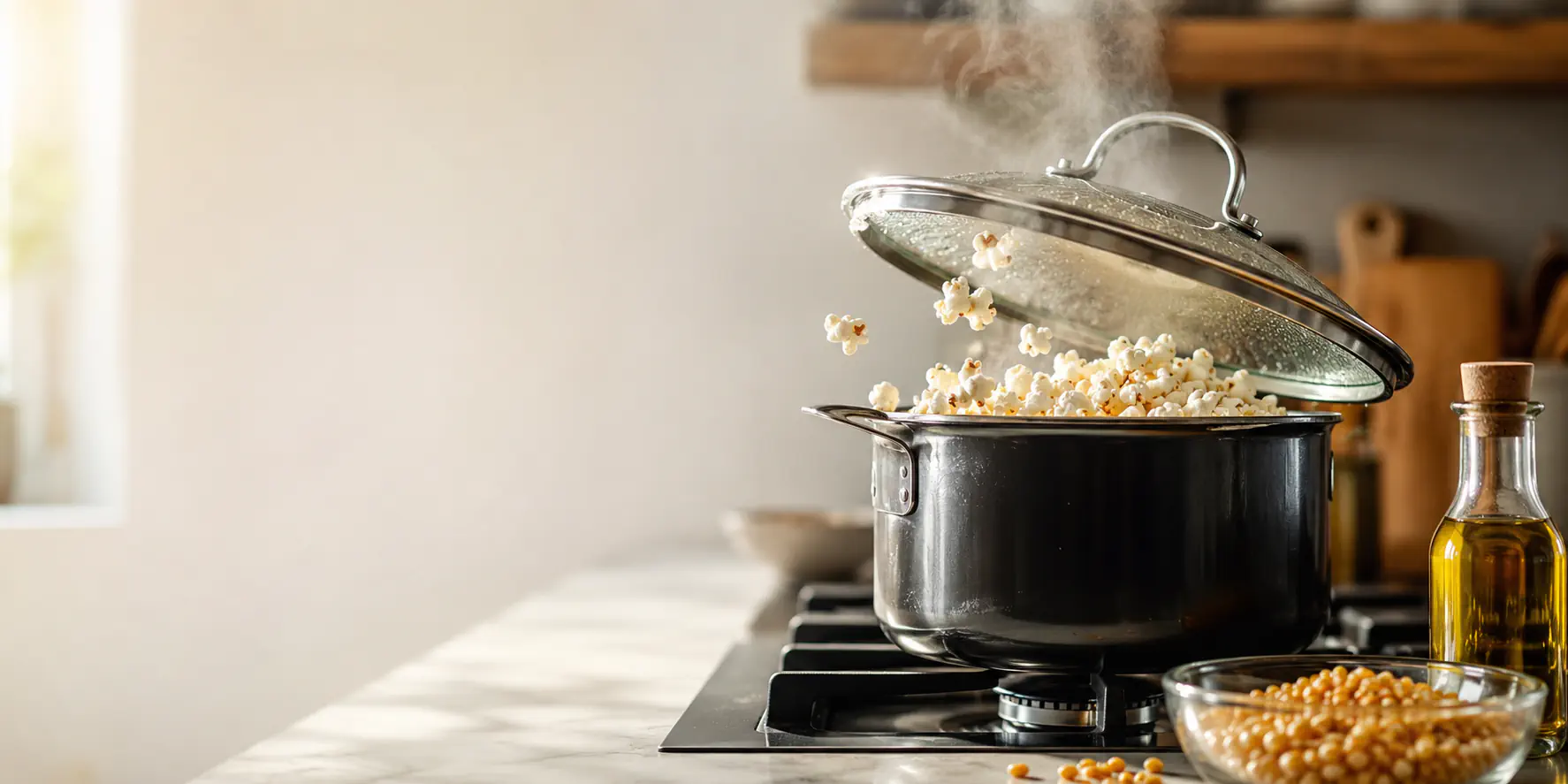
This is what perfect stovetop popcorn looks like
Lid on, good heat, and the popcorn starts jumping right out of the gap - that rattling lid is exactly how you know it's working.
Lid propped slightly open - the steam needs to get out
What you need - and what you don't
The equipment list is minimal: a large pot with a heavy bottom and a tight-fitting lid, two to three tablespoons of neutral oil, popping kernels, and a pinch of salt. That's it. No machine, no thermometer required.
The pot matters most. A heavy bottom spreads heat evenly and is your best insurance against burnt kernels. The lid should fit well but be easy to prop open slightly - more on that in a moment. A pot that's too small fills up fast; go a size bigger so the popcorn has room to expand.
The most important trick: test kernels
The one move that makes stovetop popcorn reliable is the test-kernel trick. Instead of guessing when the oil is hot enough, add two or three kernels along with the oil to the still-cold pot and heat them together.
Once those test kernels pop, you've hit the ideal temperature - exactly the moment to add the rest of the kernels. That way, all the kernels start at the right heat and pop evenly, without the first ones burning while the last ones are still cold. This one trick solves the most common frustration with stovetop popcorn.
Why the lid needs a gap
A completely closed lid is a common mistake. Popping produces a lot of steam. If it can't escape, it condenses back down and makes the finished popcorn chewy instead of crispy.
The fix is simple: prop the lid slightly open, or use one with a steam vent. That keeps the popcorn in the pot while letting the steam out. The result is noticeably crispier. This one detail is what separates chewy from perfect stovetop popcorn.
The three most common mistakes
First: too much heat. Full blast sounds faster, but it leads to a burnt bottom and a bitter taste. Medium to medium-high heat is right. Second: too many kernels at once. A thick layer pops unevenly - the bottom burns while the top stays hard. Stick to a single layer.
Third: the fully closed lid that makes popcorn chewy. Avoid these three things and you've eliminated almost every mistake. For a full list of other pitfalls, check our guide to the most common mistakes.
Does it really turn out as good as a machine?
Honest answer: yes, often even better. A pot gives you full control over heat, oil amount, and timing - more than a lot of basic machines offer. The one real advantage of a machine is convenience: no shaking, less supervision needed.
In flavor and yield, well-made stovetop popcorn holds its own against a hot-air or kettle machine. It's no accident that plenty of popcorn lovers still swear by the pot. If you want it even simpler with no stovetop at all, the microwave method is a solid alternative.